





![Ayanna Witter-Johnson [Jordan Woods] 7](https://dnan0fzjxntrj.cloudfront.net/Pictures/274x183/4/9/4/44494_ayannawitterjohnsonjordanwoods7_224583.jpg)




John Dilworth pays tribute to the British luthier, restorer and expert, who died on 9 December
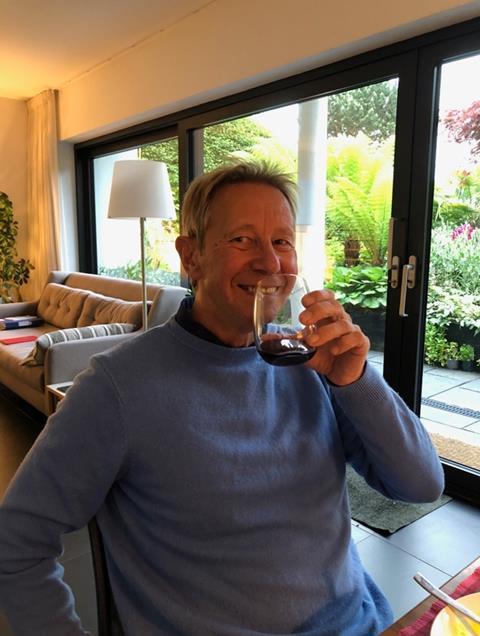
The death of Andrew Fairfax on 9 December, after a prolonged illness, has come as a great shock to his countless friends, colleagues and admirers across the world of violin making. He was one of the most skilful, diligent and knowledgeable restorers, makers and experts I have known, but above all, someone of great integrity and dedication, which was shown throughout his work with past and present makers as well as towards the musicians he served.
When I first met him as a student at the Newark School, he struck me as one of the most ‘English’ people you could imagine. He was born in Sevenoaks in Kent, his father a police officer, and Andrew traced his family proudly back to Thomas Fairfax, the commander of Oliver Cromwell’s army in the English Civil War, which inspired the names of his own two sons, Thomas and Oliver.
He came to violins, like many of us at that time, through his love of folk music and, dare I say it, morris dancing. But in truth he was enviably cosmopolitan. He met his wife Anneleen van der Grinten at Newark in his final year on the course, and joined her family violin business in Amersfoort in the Netherlands until she graduated two years later.
Through the rest of his career, he travelled widely, teaching, lecturing and researching at the Oberlin workshops in the US, and throughout Europe in his work for the Entente Internationale des Maîtres Luthiers et Archetiers (EILA), and indeed in Australia and Asia. His base for much of this was the shop of Charles Beare, which he had joined in 1982 when he returned to London with Anneleen, and with the characteristically generous encouragement of Charles himself.
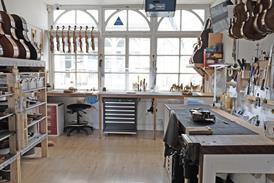
After more than 30 years with Charles as a restorer, deeply involved in instruments by the greatest masters on a daily basis, he finally made the break in order to apply this knowledge into his own new-making. This he did from the family home in Tunbridge Wells, where Anneleen continued with her own restorations in their shared workshop.
Andrew’s essential Englishness surfaced again in his love of the historical luthiers of Britain, and led him to detailed and revelatory research for the 1988 ‘British Violin’ exhibition, and the catalogue published in 2000 by the British Violin Making Association (BVMA), of which he was a founder member. In later work he focused on the Voller Brothers, which resulted in another BVMA publication in 2006.
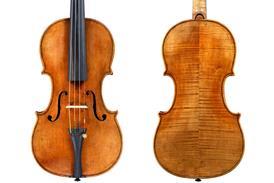
In more recent years he concentrated on the Panormo family, which drew on a lot of archival work across Italy, France and Ireland, and gave us the exemplary 2016 exhibition for Tarisio of the Panormo family’s work and its accompanying catalogue. I know that Andrew was hoping to expand this into a comprehensive book on the subject, but now this sadly cannot happen.
Of all Andrew’s qualities, beyond his outstanding craftsmanship and deep understanding of and love for the violin, it is his integrity, honesty and loyalty that I will most remember him for. He was not a man to be swayed by an insincere opinion or an easy advantage, but never at any cost to his self-effacing humour and easy manner. When my young children got to know him, in the early days of computers, they called him affectionately ‘Mr Ceefax’. Among all this, Andrew was a committed vegetarian, a fine and enthusiastic cook, and had a discriminating palette for wine.
Andrew and Anneleen spent the last few years designing and building a beautiful modernist home in Tunbridge Wells where they continued to work together, a wonderful example of a truly shared life. Their two sons are both married, Tom to Poppy, and Oliver to Jenny, who gave him the great joy of three grandsons: Alexander, Timmy and Sophie. He will be missed by them, Anneleen, and by everyone who ever met him.
I am very proud and grateful to have had so many opportunities to work with him, and to think of him as a good friend.
Andrew Fairfax, born 28 May 1953, died Tunbridge Wells, Kent, 9 December 2025
Read: Double Acts: Andrew Fairfax and Anneleen Fairfax-van der Grinten
Read: In Focus: A c.1800 violin by Joseph Panormo
Read: Exhibition dedicated to violin maker Vincenzo Panormo to open in London









No comments yet