




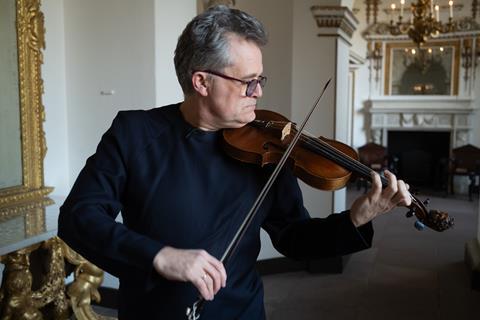
The British violinist on a musician’s duty and the importance of community
Discover more Featured Stories like this in The Strad Playing Hub.
Read more premium content for subscribers here
I was very lucky that my first teachers believed music should be taught and experienced in connection with the other arts. My mother, Susan Sheppard, gave me my first lessons, and I then studied with Beatrix Marr. Her violin teaching was ‘joined up’ with literature, poetry and particularly drawing and painting, which are still very important to my practice today. From the age of twelve I went to the extraordinary Ralph Holmes, whose studio was full of art from all periods. His visionary playing and inspired teaching set the standard for what it means to be a musician: to be truthful. He died much too young, but I am grateful to him every day.
At the Royal Academy I studied with Manoug Parikian, and had chamber music lessons with Sidney Griller and Norbert Brainin. All of them had an uncompromising attitude to the duty of being a musician, which has many facets. We might think about it as the ethics of our technical approach. The way in which we play should not be the most convenient solution, but a method of bringing us closer to the heart of the matter. Louis Krasner told me, ‘The right fingering should feel like you’re hanging on the side of a mountain by your fingernails.’ We are heirs to an extraordinary craft and we must continue it without compromise. Practice never stops.
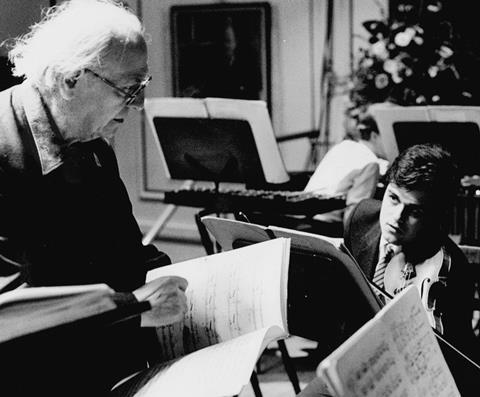
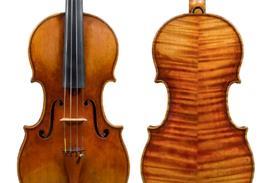
Working with Krasner in Boston was life-changing. I went to study the Berg Violin Concerto with him, which he had commissioned and premiered. Discussing Berg’s use of Bach’s chorale ‘Es ist genug’, Krasner said, ‘Unless you truly believe that Bach arranged this chorale specifically so that Berg could find it, then you’ve got no business being a violinist.’ To hear this from someone who had known people in Berg’s circle ignited something that stays with me to this day: what we do is a miraculous connection to others. This also goes for many of the composers I’ve worked with over the years as well as my interest in instruments and the ‘X factor’ you feel when playing a violin used by a famous musician of the past.
These connections, and why we are compelled to do what we do, are things we can’t explain, but we are guided by what we encounter along the way, whether music, people or instruments. Ultimately, I believe it is all about community. Even Beethoven, who expressed the intimate grandeur of humanity through his music, was driven by community. He ran weekly workshops with players and you can see the results of this collaborative approach in his manuscripts.
We all try to balance the practicalities and duty of being a musician. How can we stay fascinated by what we do for the whole of our lives? There are artists doing extraordinary work because they simply have to, whether or not they are listened to. And if you can’t stop someone from doing something, then they’re doing something right.
INTERVIEW BY RITA FERNANDES
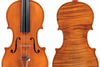
Watch: Peter Sheppard Skærved on the ‘Pierre Rode’ Stradivari
Watch: Video: Peter Sheppard Skærved celebrates the Newark School of Violin Making in new film
Discover more Featured Stories like this in The Strad Playing Hub.
Read more premium content for subscribers here









No comments yet