





For the British violinist, Shostakovich’s String Quartet no.15 calls to mind a moving Menuhin rehearsal and her initiation into the Brodsky Quartet
Discover more Featured Stories like this in The Strad Playing Hub.
Read more premium content for subscribers here
Shostakovich’s String Quartet no.15 is a dark piece, but I find its darkness filled with radiance. In all the late Shostakovich quartets, the darker they are, the more illuminating are the shafts of light that burst through. The 15th contains some very violent, grim and scary passages but it has an incredible depth that I find absolutely special. Like Schubert’s music, it can be joyful and sorrowful at the same time.
I remember the first time I heard it very well. I was aged 16, at the Gstaad Menuhin Festival with a small group of students from the Menuhin School, to give a performance of Debussy. I used to sit on the floor and, just out of interest, listen to Menuhin rehearsing with all kinds of people. One morning the news came through that Shostakovich had died, and Menuhin played through the 15th Quartet as a tribute to him. I think the cellist for that playthrough was Paul Tortelier, who was in the festival that year. It made a huge impression on me; at that time I didn’t know much about Shostakovich’s music, but when they finished playing, there was a long silence and I remember Menuhin saying, ‘Yes, he was a very sad man.’
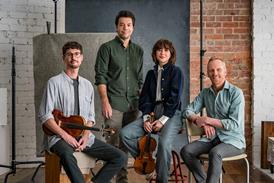
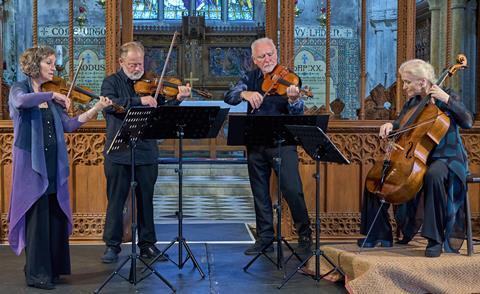
That was my first memory of the piece, and I’ve only heard it live in concert a few times since. I didn’t play it myself until about 40 years later! I was leader of the Dante Quartet for 25 years, and only near the end of that time, around 2018, did we decide to tackle the complete Shostakovich quartets. To familiarise myself with them, I bought a box set by the Brodsky Quartet – and to my great surprise and delight, just a few years later I found myself joining them!
I was familiar with playing the quartet version of Haydn’s Seven Last Words, which I think has parallels with the 15th. Clearly Shostakovich thought of this quartet as his own seven last words, being a series of connected slow movements. In rehearsals, he jokingly asked the members of the Beethoven Quartet to play the opening movement ‘so that flies drop dead in mid-air and the audience starts leaving the hall from sheer boredom’. But he did also say that ‘I tried to write a dramatic work. I’m not sure if I succeeded, but I had joy in writing it.’
One of the things that attracts me to Shostakovich’s music is the openness of interpretation. The Borodin Quartet’s recording of the 15th is so unusual, for example, and fantastic in its own way. But I feel that Shostakovich’s notes can lend themselves to all kinds of different approaches. This openness of thought was also one of the things that attracted me to the Brodskys: I remember when I arrived for the first rehearsal, my new colleague Ian Belton ceremoniously took out an eraser and put it on his music stand, to indicate there were no rules and we could change our mind about anything. There was no sense that I had to join in with something predetermined, because to this day, when we rehearse we are open to rethinking.
It’s hard to practise the 15th, and indeed any slow movement, because you have to expand your sense of time while being simultaneously very patient and thorough. It’s easy to become tense when playing slow music, and the physical and mental concentration needed for the 15th Quartet mean that you have to build up to it like a slow marathon. So anyone tackling the piece should be familiar with practising long notes and slow scales, to have heightened attention and awareness, and keep a constant focus on the moment-by-moment quality of sound. If you can enter the zone, the rewards are phenomenal.
INTERVIEW BY CHRISTIAN LLOYD











No comments yet