
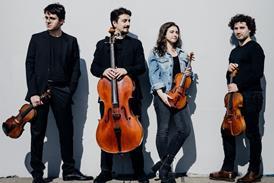
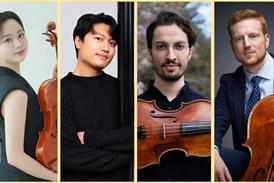

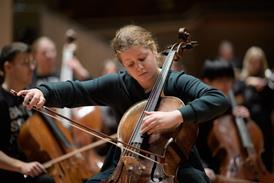
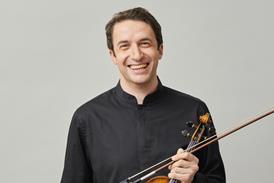
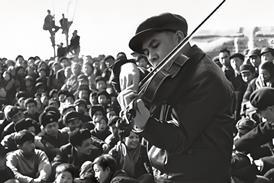


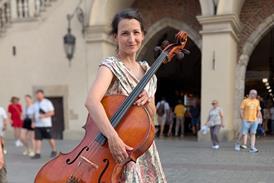
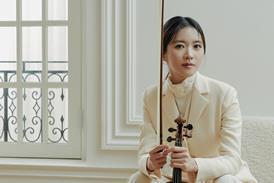
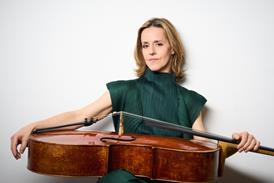






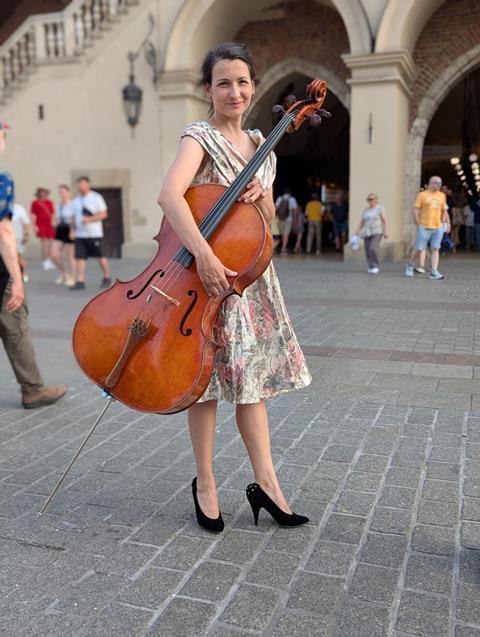
Cellist and researcher Joanna Latała examines how preparation for competitions requires more than just learning the notes in the practice room
Discover more Featured Stories like this in The Strad Playing Hub
For the musicians about to step onstage at competitions, months – and in many cases years – of preparation have already gone into this moment. The repertoire has been chosen, difficult passages have been practised, technical problems have been worked through, and interpretations have been developed and refined. But there is another part of preparation that is often discussed much less: how do you prepare to actually perform when the stakes are high?
A competition is not simply just another concert. It presents a different psychological environment from the practice room. You may be performing in an unfamiliar hall, in front of a large audience, while being evaluated by a jury of experienced musicians. You may have travelled from another country, be surrounded by exceptionally strong competitors, and know that every performance can influence what happens next in your career. And you are expected to walk onto the stage and make music.
This raises an important question: Is practising the repertoire enough to prepare a young musician for a competition?
I don’t think it is. Preparing the music is essential. But preparing the musician who will perform that music is equally important.
When preparation meets pressure
One of the most difficult things for young musicians to understand is that being well prepared in the practice room does not automatically mean being able to perform at the same level under pressure.
In the practice room, we usually control the environment. We know the room, we know when we will start, we can stop, we can repeat a passage and we can make a mistake and immediately try it again. A competition offers none of these comforts. The performance happens once.
And suddenly, skills that seemed completely reliable in practice may feel much less accessible. Attention can become narrower, the body may become tense and thoughts about mistakes or judgement may become louder. A young musician may suddenly become aware of the jury, the audience, the acoustics, the other competitors – or simply the fact that this performance matters.
This is not necessarily a sign that something has gone wrong. It is a natural response to a high-pressure situation. But it is a response that can be trained.
’The ability to focus the mind is the ability to not let it run away with you’ — The Inner Game of Tennis by Timothy Gallwey
We prepare the music. But do we prepare the performance?
When musicians are worried about an upcoming competition, the most natural response is often to practise more. Another repetition, another difficult passage, another run-through, another hour at the instrument. More practice can certainly be valuable. But at a certain point, the question should change from ’How can I make this better?’ to ’How can I perform what I already know when the pressure arrives?’
That requires a different kind of preparation. It means deliberately practising concentration, learning how to recover after a mistake instead of trying to eliminate every possible mistake, developing a pre-performance routine and learning how to direct attention towards the music rather than towards thoughts about being judged. Importantly, it also means experiencing elements of performance pressure before the actual competition. The stage should not be the first place where a musician learns what it feels like to perform under pressure.
Preparing for mistakes
One of the biggest traps in competition preparation is trying to create a completely flawless performance in the practice room. Young musicians can spend enormous amounts of time trying to prevent every possible mistake. But mistakes are part of live performance. Even the most experienced musicians make them.
The important question is therefore not only ’How can I avoid making a mistake?’ but also ’What will I do if I make one?’ ’Can I continue?’ ’Can I return my attention to the music?’ ’Can I prevent one moment from turning into the next 30 seconds of the performance?’ ’Can I trust the preparation I have already done?’
These are performance skills. And like technical skills, they can be practised.
Making the unfamiliar familiar
Mental preparation also means creating opportunities to experience the conditions of performance before the competition itself. A musician might practise a complete programme without stopping, perform in front of other people, record a performance, enter the room without immediately beginning to play, practise recovering after an intentional mistake, or create a routine for the moments immediately before walking onto the stage.
These exercises may seem simple, but they serve an important purpose. They teach the brain that performing is not an entirely unfamiliar situation.
The goal is not to eliminate nervousness. The goal is to learn how to function effectively while nervous.
’Performance under pressure … is not about being fearless … it is about acting despite fear and discomfort’— Pressure: Lessons from the Psychology of the Penalty Shootout by Geir Jordet
The role of confidence
Confidence is another area that is often misunderstood. Confidence does not mean believing, ’I will definitely win.’ And it certainly does not mean never feeling nervous.
A more useful form of confidence is the belief: ’I know how to respond to what happens.’
I may make a mistake. I may feel nervous. The hall may feel different from what I expected. The first few seconds may not feel perfect. But I have a plan. I know where to place my attention, I know how to return to the music, I know how I want to begin, and I know how I want to respond when something unexpected happens.
That kind of confidence is built through preparation and experience.
Preparing the person, not only the repertoire
By the time young musicians arrive at a major competition, they will have already invested an extraordinary amount of time and energy into their music. The final stage of preparation should therefore not necessarily be about adding more and more. Sometimes it is about learning how to use what is already there.
The technical work has its place. The musical work has its place. But so does preparing attention, routines, emotional regulation, recovery after mistakes and the ability to perform under pressure.
A major competition asks much more of a young musician than simply remembering the notes. It asks them to step onto a stage and remain present when the outcome matters. That is a skill in itself, and it deserves to be prepared for.
What I observed during the Chopin Competition
Last October, while watching the International Chopin Piano Competition in Warsaw, I found myself observing not only the performances themselves, but also what was happening immediately before the pianists walked onto the stage. Participants had arrived from different continents, countries, musical traditions and schools, bringing with them very different approaches to preparation and interpretation.
During the first-round auditions, I noticed an interesting contrast. Some performers appeared to be physically warming up, pacing around, moving restlessly, avoiding cameras or trying to release the growing adrenaline through movement. Others seemed almost unsure what to do with themselves, walking around the foyer as the tension increased. And then there were those who appeared remarkably calm: standing quietly, taking deliberate breaths, focusing their attention and following what seemed to be a familiar pre-performance routine. Some even smiled and waved at cameras, acknowledging the audience before entering the stage.
The differences continued once they walked into the concert hall. Some greeted the audience with confidence and appeared genuinely ready to receive the applause before beginning. Others seemed nervous and rushed towards the piano, eager to sit down and start playing as quickly as possible. There were small but striking differences in the rituals surrounding the performance: repeatedly wiping the keyboard, rubbing hands against trousers, looking towards the ceiling, adjusting the bench several times, or moving restlessly just before beginning.
And then there were performers who seemed to carry out these actions only once – calmly, deliberately and with purpose. Their body and attention appeared to be working together. The sequence of movements reminded me less of a nervous young musician facing a large audience and more of an elite athlete preparing for a crucial moment – like tennis player Novak Djokovic as he prepares to serve.
Of course, we cannot know from the outside what preparation each performer had received. But what was striking was how different their pre-performance behaviours were. Some appeared to be reacting to the adrenaline as it arrived, while others seemed to have a familiar sequence that helped them organise their attention and prepare for the performance.
This is precisely why I believe that pre-performance routines deserve a much more important place in music education and competition preparation. A routine does not have to be complicated. It might involve a few breaths, a particular sequence of physical movements, a moment of stillness, a specific attentional cue, or simply a consistent way of approaching the instrument before beginning to play. Its purpose is not to make a musician look calm. Its purpose is to help the musician become ready.
’Overcoming is the Currency of Champions’ — With Winning in Mind by Lanny Bassham
The need for psychological preparation
Observing major competitions also raises a broader question: should psychological preparation be considered an integral part of preparing young musicians for high-level competition rather than an optional addition?
Today, some young musicians have access to performance coaches, psychologists or other forms of mental training, while others may never have been introduced to practical strategies for managing pressure. Yet the demands of the competition itself are shared by everyone. They have to walk onto the same stage, perform under the same conditions, deal with the presence of an audience and jury, recover from mistakes and continue making music while their body is responding to the pressure of the moment.
This raises an important issue of access. Mental preparation should not become another advantage available only to musicians whose families, schools or teachers know about these methods and have the resources to provide them. Young musicians deserve the opportunity to learn how to prepare not only their fingers, their repertoire and their interpretation, but also their attention, body and mind.
Many of the strategies used in performance psychology and sport psychology are practical and trainable: pre-performance routines, breathing and centring techniques, visualisation, attentional strategies, methods for recovering after mistakes and ways of preparing for the physical and emotional experience of performing under pressure. They are not designed to eliminate nervousness. They are designed to help musicians function effectively when nervousness is present.
Beyond the repertoire
A major competition brings together musicians who may differ enormously in background, culture, education and experience. Yet once they walk onto the stage, they face a remarkably similar challenge: how to remain themselves and make music when the pressure is high.
The repertoire may be different. The traditions may be different. The preparation methods may be different. But the human experience of standing on a stage, knowing that people are listening and evaluating, is something every competitor must learn to navigate.
Perhaps this is the next step in how we think about competition preparation. We have become very good at teaching young musicians how to practise, how to refine technique and how to develop interpretation. We should also teach them how to perform.
Because the goal of preparation is not to create a musician who never feels nervous, never makes a mistake or never experiences doubt. The goal is to help a musician walk onto the stage with enough skills, strategies and trust in their preparation to remain present when it matters most.
Preparing for a competition is not only about preparing the music. It is about preparing the musician who will walk onto the stage with it.
Joanna Latała is a Polish-born cellist and researcher specialising in mental training for musicians. Based in Scandinavia, she has performed at venues such as Carnegie Hall and Berliner Philharmonie. In 2023, she founded the platform Achieve Performance Mindset, where she shares insights on performance psychology to help musicians build mental resilience.















No comments yet