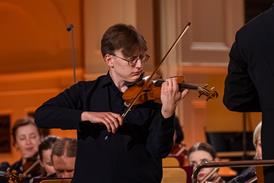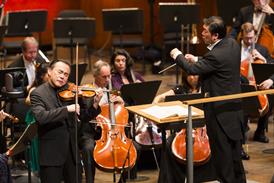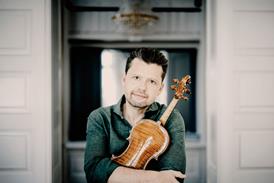
Lucie Robert, violinist and professor at the Manhattan School of Music, offers sage advice to young string players planning to step on to the competition path

Discover more Featured Stories like this in The Strad Playing Hub
Read more premium content for subscribers here
There is much to be said about competitions for musicians — on the pros and cons, and what truly matters. Over the years, I’ve had the privilege of serving on several national and international competition juries, and what follows are some thoughts and observations from that experience.
Competitions aren’t the right path for everyone, and that’s absolutely OK. There are many ways to build a successful musical career. But if you do choose to take the competition route, the first and most essential skill to develop is learning how to handle the competitive aspect in a healthy, sustainable way.
Let’s look at competition from a broader perspective. In life, comparing ourselves with others is natural, and even necessary for growth. It helps us to discover what we value, to understand our limits, to develop willpower and to learn perseverance. In short, it plays a role in shaping who we are and who we become.
In music, we experience similar comparisons. No one develops in a vacuum. We learn from one another. As a student, for example, whether you are in a studio class or listening to your peers in recital, it’s hard not to notice differences and sometimes feel the tug of competition. That’s normal; in fact, it can be a powerful motivator. Used well, it can push you to work harder, dig deeper and grow faster. Competition doesn’t need to be negative, unless we let it be.
One of the major challenges of musical competition is that – unlike sports – music does not always produce a clear ‘winner’, and that’s OK. Music is inherently subjective. What moves one person may leave another unmoved. Each of us brings our own history, emotions and personal taste to the listening experience. As a jury member, I’ve often seen how deeply individual these responses can be, even among seasoned experts. And as a listener, I know that what resonates with me doesn’t always resonate with someone else. Listening to music is always an individual experience, and that’s part of what makes it so powerful. Just look at the incredible variety of great violinists past and present, each with their own musical personality, sound, sensitivity and style. What they all share, though, is a distinct, powerful musical voice that speaks directly to an audience. This, to me, is the most important thing. That voice is what makes a career.
In today’s world, with social media amplifying exposure, every performance matters – so any opportunity should be seized. Too often, I see young musicians walk on the competition stage focused above all on being accurate. For me, that’s the biggest mistake.
A competition should be treated like any performance. Don’t play for the judges; play for the audience. Share your voice. Share your ideas. That, I believe, is what will truly make an impression.
How we practise matters. What we prioritise in our practice shapes who we become as artists. For me, the highest level of technical achievement means the freedom to express whatever the music calls for, which in my opinion is the higher calling. Yes, it is essential to play in tune and with precision, but that is only the beginning. Don’t let accuracy become your primary goal. If you do, you risk losing the very thing that makes your playing special: your unique sense of expression, your interpretation.
Music is a language of emotions and ideas. Don’t forget that. In your preparation, spend as much time searching for your musical values – your voice – as you do refining your accuracy. Treat competitions as performances, not tests. Use your technique in service of the music.
At the end of the day, whether you win or not, what lasts is your voice. Find it, nurture it and share it. That’s what makes an artist.
Read: How to win without winning - Competitions: The competitive advantage
Read: Technique: Lucie Robert on expressive fingerings on the violin
Discover more Featured Stories like this in The Strad Playing Hub
Read more premium content for subscribers here


No comments yet