




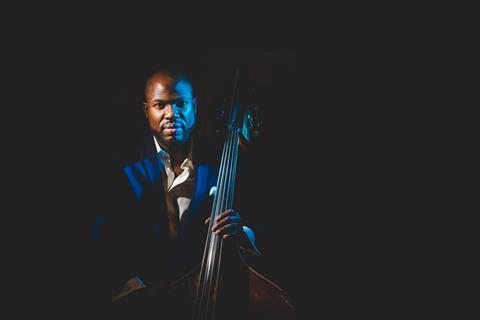
The US double bassist reflects on his biggest influences and the necessity of leading by example
Discover more Featured Stories like this in The Strad Playing Hub.
Read more premium content for subscribers here
My first formal introduction to music was through the piano, with an extraordinary teacher called Rose Marie Smith in Savannah, Georgia. She really emphasised theory, so I learnt the mechanics of music right out of the gate. It was string teacher Lynne Tobin who got me started on the double bass at the age of eleven but my first dedicated bass tutor was David Warshauer, principal bass at the Savannah Symphony. He was an excellent teacher. He wasn’t specific about what I had to play. Instead, he allowed me to explore all sorts of repertoire.
At the Brevard Music Center, Dan Swaim and Kevin Mauldin taught me the fundamentals of how to play in an orchestra. It was during a wonderful summer at the Tanglewood Institute that I learnt about the Curtis Institute of Music, where I eventually studied with Hal Robinson, principal bass of the Philadelphia Orchestra. Just watching him play with the orchestra was a huge influence. He had an approach to sound that was very attractive. Edgar Meyer, who embodied the idea of ‘figuring it out as you go’, was also a great influence, as was Albert Laszlo, who broke down the fundamentals of bass playing into the physics of playing the instrument. Laszlo covered everything from how good posture alone can help maximise sound production to the importance of managing how we vibrate the string fully with each bow stroke. That scientific approach resonated with me as someone who is a well-known weather nerd!
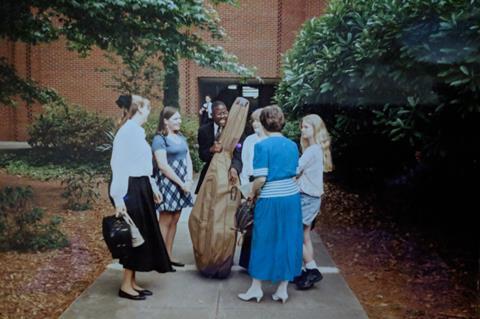
Many influences were not just teachers, but my environment played a huge role. I grew up in a traditional Black Baptist Church with gospel music. The neat thing about joining my church choir was that there was no audition; you had to show up and make ‘joyful noise’. Singing was about expression and connection. This influence, alongside classical music, made me into the musician I am today. And while some people may have hidden that side of themselves in the classical music world, it turns out that my individuality was my strength.
When it comes to being a section principal, I lead by example. It is as true on stage as it is off – how you handle yourself, communicate with your colleagues, and guide the section in a way that makes them trust you.
Only pursue music because you love it, not to please someone else. It’s possible you might not make much money straight away. You have to be willing to accept this. Life’s anxieties abated when I was reminded why I did what I did.
We have such a gift as classical music artists; we should always share that gift. What we do is fantastic, but we can’t live in a world where we’re the only ones who realise this. Likewise, we often neglect other genres of music that we could, in fact, learn from – particularly genres from other cultures. The more we learn from each other, the more we can contribute to making our art form great.
INTERVIEW BY RITA FERNANDES
Read: Double bassist Joseph Conyers: Driven by music
Read: Joseph Conyers receives ASTA Artist Teacher Award
Discover more Featured Stories like this in The Strad Playing Hub.
Read more premium content for subscribers here
The number one source for playing and teaching books, guides, CDs, calendars and back issues of the magazine.
In The Best of Technique you’ll discover the top playing tips of the world’s leading string players and teachers. It’s packed full of exercises for students, plus examples from the standard repertoire to show you how to integrate the technique into your playing.
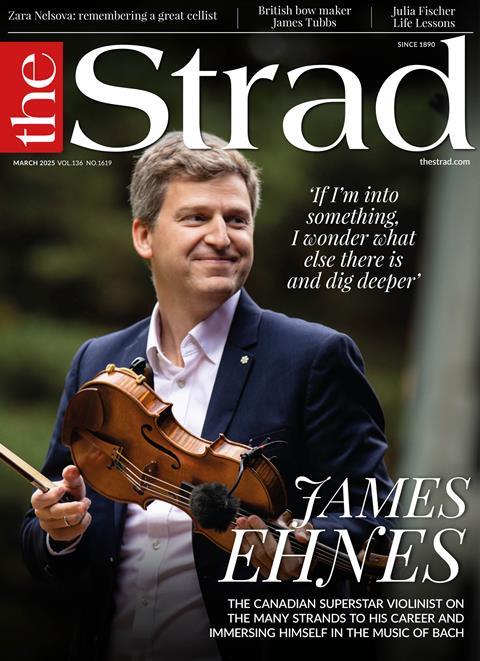
In the second volume of The Strad’s Masterclass series, soloists including James Ehnes, Jennifer Koh, Philippe Graffin, Daniel Hope and Arabella Steinbacher give their thoughts on some of the greatest works in the string repertoire. Each has annotated the sheet music with their own bowings, fingerings and comments.
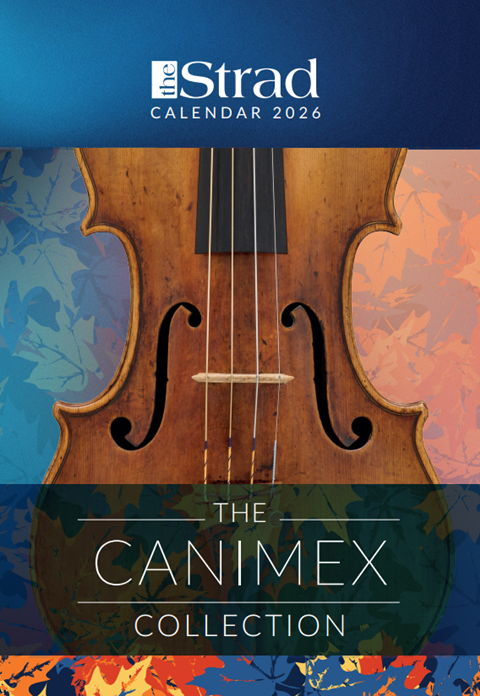
The Canada Council of the Arts’ Musical Instrument Bank is 40 years old in 2025. This year’s calendar celebrates some its treasures, including four instruments by Antonio Stradivari and priceless works by Montagnana, Gagliano, Pressenda and David Tecchler.







No comments yet