
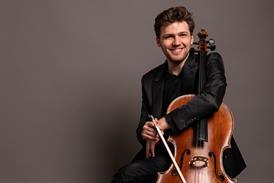





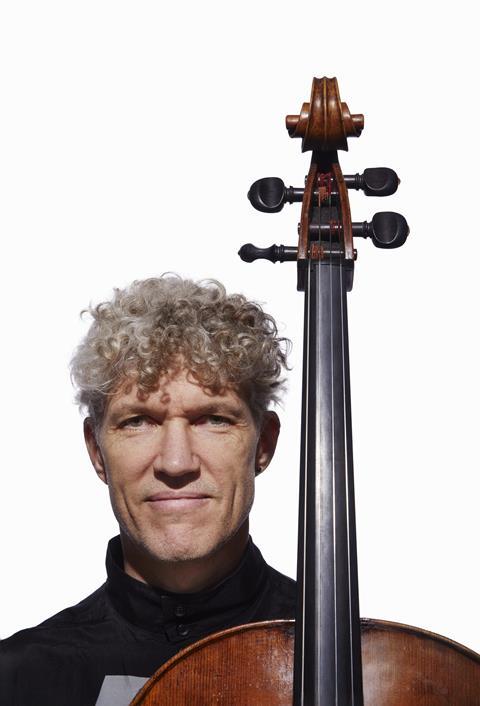
As Arvo Pärt turns 90, British cellist Matthew Barley speaks about creating ‘Touching Eternity’, a candlelit programme that weaves Bach, Pärt and Tavener into a shared ritual of sound and silence.
Discover more Featured Stories like this in The Strad Playing Hub
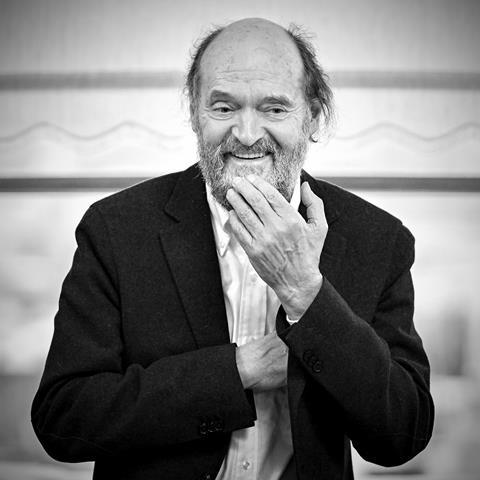
Arvo Pärt turns 90 this year, and the anniversary has inspired musicians worldwide to revisit his luminous, pared-back, spiritually resonant sound world. But for British cellist Matthew Barley, Pärt’s appeal isn’t limited to an anniversary celebration. He describes the music as ‘thrilling me in a quiet way’, ‘rewiring my insides’ and bringing ‘a state of deep peace…and awe’.
Barley says Pärt’s music needs a special relationship with sound — ‘weight but no pressure’ — and an attention to how each note begins, travels and ends; he adds that this brings ‘great tactile and aural pleasure’ as he plays.
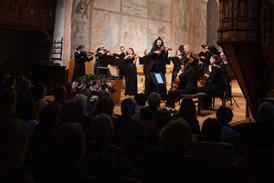
Barley’s candlelit programme, Touching Eternity: Arvo Pärt and JS Bach, is the brainchild of Toby Chadd at Sinfonia Smith Square, the organisation that runs the newly renamed Smith Square Hall, where the performance takes place on Friday 12 September at 7pm. It sets movements from Bach’s solo cello suites in dialogue with Pärt’s choral works, sung a cappella by the Purcell Singers under Benjamin Kirk, and culminates in Tavener’s Svyati for cello and choir.
Barley says the kinship between Bach and Pärt is ‘in the intention behind the music’, with the divergence heard in their musical languages. He expects to give Bach ‘a little more space than usual’, adding that the experience on the night will affect his playing in the moment.
Between pieces, he will change position within the hall — sometimes unseen — with silences in between, candles lighting the space and a ‘ritual, ceremonial’ feel to the sequence.
Speaking to US correspondent Thomas May, Barley discusses how the programme’s blend of Bach, Pärt and Tavener took shape, and how silence, space and movement through the hall will help turn the evening into a shared act of listening.
What personal significance does Arvo Pärt’s music have for you?
Matthew Barley: Arvo Pärt’s music is in a very specific place in my heart. Something of the north (distant echoes of Sibelius, combined with a mantle of sonic incense from the church, and a heart from the meditation hall) makes music that is unique. It thrills me in a quiet way, rewires my insides to make me feel more, and brings a state of deep peace, and some kind of awe.
Why do you think his music resonates so deeply with musicians and audiences?
Matthew Barley: Great music carries universal qualities (those that transcend time and place), and is also a product and reflection of its age, and in Arvo Pärt’s case I believe that this music is healing for the heart and soul in a particular way that is much needed at this moment in history, resonating deeply for those that need that and are open to it.
As a cellist, how do you connect with Pärt’s language?
Matthew Barley: I have enjoyed playing Pärt’s music on the cello for many years – from a performance of Fratres for four cellos in the early 90s. I think his music needs a special relationship with sound (deep, full string contact but very carefully calibrated to have weight but no pressure), as well as a way of starting, travelling through, and ending each note which brings great tactile and aural pleasure as I play.
What are the most striking interpretive challenges of performing Pärt?
Matthew Barley: One of the challenges of Pärt’s music is that much of it requires very little practice as the actual notes can often be simple and slow (there are striking exceptions), and in these instances a particular attitude to each note has to be cultivated, as mentioned earlier.
How did the idea of combining Pärt with J.S. Bach (and a bit of John Tavener) take shape?
Matthew Barley: This concert programme is the brainchild of Toby Chadd, the director of Sinfonia Smith Square, Friday’s perfect venue for this concert. Pärt, Bach and Tavener all composed with their gods very much in mind and heart. Maybe more than many other composers – it feels so intrinsic in their cases – so the combination is very natural. The idea of alternating between Pärt’s choral music and a solo cello with silences in between (me being in a different location in the hall each time, sometimes unseen, candles lighting the hall), and then cello and choir joining for the final piece lends the concert a ritual, ceremonial feel. I can’t wait.
Both excerpts from the cello suites and choral music by Bach will be heard in dialogue with Pärt’s music. Where do you hear kinship between them – and where do they diverge?
Matthew Barley: The kinship is in the intention behind the music, and I think the divergence is heard in the musical language, one of Germany in 17th and 18th centuries, and one from Estonia in the late 20th century.
How do you adjust your approach when moving between Bach’s language and Pärt’s pared-down world? And how does the immersive candlelight setting shape your interpretation?
Matthew Barley: I don’t know yet, although I suspect that the Bach will have a little more space than usual. But I will find out on Friday – I’m sure the experience will be strong and that will affect my playing in the moment that I play. I’m not preparing in any different way, but I will be listening and feeling and we’ll see.
Both composers are often described as ‘spiritual’. Do you feel that in performance, or do you prefer to think of it simply as music?
Matthew Barley: Spiritual can mean many things, but in a simple form it is describing something that is not material – in this sense all music is spiritual. The heart of what music is for and about can only be explained by music itself, not in words, but sound is a foundation of many religions and spiritual ways. It is a carrier, a messenger, bringing us something beyond the material, beyond the precise illuminations of language that can be so misleading.
Music cannot be evil (angry, ugly, scary, yes – but not evil, even if the composer is!), and that is a beautiful characteristic. Music, like certain religions acknowledging that it is impossible to name god, and that attempts to do so actually move you further from what you are trying to explain, IS spiritual, and that of Friday’s composers is very close to the heart of that mystery – probably not for everyone, but for those wishing, prepared and able to hear what is happening, it’s powerful stuff.
The Purcell Singers and Benjamin Kirk with Matthew Barley perform Touching Eternity: Arvo Pärt and JS Bach on Friday 12 September at Smith Square Hall.









No comments yet