
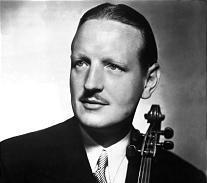
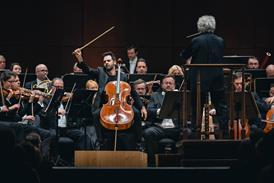
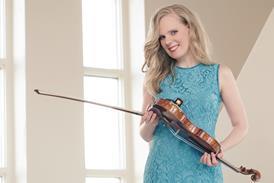

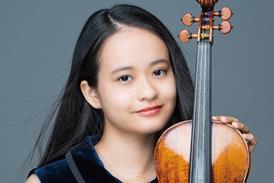






Eleonor Bindman’s initiative Classical for Kids gathers classical, jazz, and world music into playlists built around a family’s day. She and Samuel Wu explain how the collections are curated and what early listening does for a young ear – and share a selection of string works for The Strad’s readers

Read more Featured Stories like this in The Strad Playing Hub
’If children hear fine music from the day of their birth and learn to play it, they develop sensitivity, discipline and endurance. They get a beautiful heart.”’– Shinichi Suzuki
Long before children draw a bow across a string or even hold a violin, they have been surrounded by tremendous amounts of music and sound: songs in the supermarket, sing-alongs in the nursery, and from the very beginning, muffled sounds heard through the womb. Music is a child’s first language, and like speech, is learnt early on by ear.
That early listening does measurable work. A 2016 study at the University of Washington’s Institute for Learning & Brain Sciences found that when nine-month-old babies took part in musical play built around simple, waltz-time rhythms, their brains grew better at processing the patterns that underlie both music and speech – without being taught anything, simply by listening beside a caregiver. A 2025 review in Acta Paediatrica, drawing on twenty-seven studies, found that most reported gains in areas such as attention and executive function. For a child who may one day pick up an instrument, much of the groundwork – a feel for rhythm, phrase and pitch – is laid in these first years of listening.
For earlier generations, that listening came from a shelf of LPs or CDs. Streaming has changed the terms: centuries of repertoire now sit a tap away, sorted by algorithms that draw on tempo, key, the artists on a track and a listener’s own history. It is a remarkable convenience, though one that tends to surface what is already popular or already familiar.
Classical for Kids (C4K) is an initiative created by the pianist and recording artist Eleonor Bindman, who is also a parent and a teacher. It gathers instrumental music – classical, jazz, world, and folk traditions – into playlists for parents, grandparents, caregivers and teachers to use with young children. Each playlist is assembled by hand and is free on Spotify, Apple Music, and YouTube.
The collections are organised not by genre or era but by moments in the day. A Bedtime & Relaxing category gathers soft, unhurried music with tempos hovering around 60 to 70 beats per minute – close to a resting heart rate, on the principle that the body tends to settle towards the pulse it hears. A Playtime & Energetic category collects brighter, more rhythmically active repertoire; two further categories, Imagination & Creativity and Focus & Quiet Time, are shaped around the kinds of attention their names suggest.
The playlists deliberately contain only instrumental music without lyrics. Words ask a young child’s developing brain to decode meaning; without them, the ear is free to follow rhythm, line, texture, and colour. The selections are made by working musicians and educators, guided by a few questions: which pieces reward careful listening, which performers are heard less often but merit attention, and how a sequence might widen a child’s ear rather than narrow it.
Strings run through much of this. Several collections lead with them – solo violin and cello, string quartets, and orchestral writing – chosen not for their difficulty but for the way the sound draws a young listener in. A Bach cello suite unfolds a single musical idea across a whole movement: one line, on an instrument often described as the closest to the human voice, holding a child’s attention through sheer continuity. A string quartet offers something else again – four independent voices in conversation, an early lesson in hearing more than one thing at once. And in a playlist called Guess the Instrument, listening becomes a game of telling one voice from another – a cello from a clarinet, a sitar from a steel drum.
The range is deliberately wide. One collection, Musical Travel, moves across more than twenty musical traditions, setting works side by side so a listener can hear how they speak to one another across borders; an accompanying unit plan, written for people without a musical background, pairs, for example, Julio César Oliva’s Chichén Itzá for solo guitar with Sean Hickey’s Dolmen for solo piano, each inspired by a monument from the culture it belongs to. Elsewhere, Bach, Beethoven and Mozart sit alongside Florence Price, Carlos Chávez, the jazz violinist Stéphane Grappelli and the harpist Brandee Younger. Colouring sheets with original artwork accompany many of the playlists on the C4K website.
The wider effects of this kind of listening are hard to measure precisely, though a growing body of research shows interest. Tiffany Field’s study at the University of Miami found that toddlers fell asleep 35% faster when classical guitar music was played at naptime – the slow, low plucking doing the physiological work of lowering the heart rate and breath. Research in childhood development also shows promise; a 2025 study from the National University of Singapore and the A*STAR research agency linked heavy screen use before age two to later difficulties with flexible thinking and mood, while finding that shared activities such as reading and listening to music together helped offset them.
The C4K library continues to grow – new playlists are added regularly, and existing ones revised over time as the curators learn which pieces families return to. For The Strad, C4K has gathered a selection of string works – solo, chamber and orchestral – drawn from across those playlists. It can be heard on Spotify.












No comments yet