












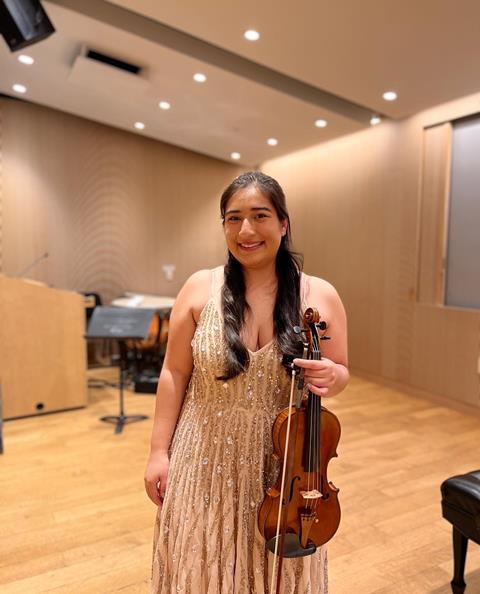
Viviana Garcia breaks down the variations of imposter syndrome in orchestra teachers and offers tips to those who may be struggling
Read more Featured Stories like this in The Strad Playing Hub
What is imposter syndrome?
Imposter syndrome is the fear that people think (or will one day think) that you are not as qualified for the position that you are in. Over time, imposter syndrome can manifest into feelings of self-doubt, insecurity, anxiety and burnout due to fear of being exposed as an imposter.
Who does imposter syndrome affect?
Anyone can experience imposter syndrome, though certain demographic groups are more prone to feelings of imposter syndrome due to systemic inequities and personal expectations.
This is but not limited to artists, women in male-dominated fields, first generation college students, Immigrants and people of colour, members of the LGBTQ+ community and music educators.
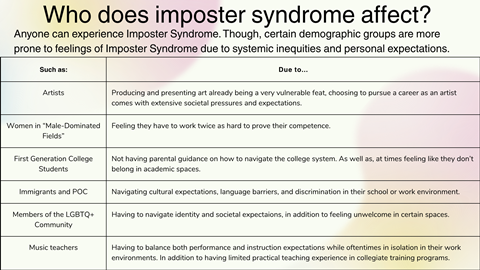
Any music educator may find themselves identifying in one or more of these demographic groups, making their intersectionalities an important consideration when it comes to discussions about music teacher imposter syndrome.
One thing I hear most among colleagues and prospective orchestral educators is that they did not receive enough practical teacher training during their time in school and now they are learning how to conduct and manage the classroom while on the job.
In my experience while growing up, my primary focus was learning the violin. I knew maybe one day I would love to direct an orchestra but for the college audition process and my curriculum in college, the focus was on becoming a better violinist.
When it came to learning how to conduct I found myself extremely under-experienced in terms of juggling score reading while executing the correct conducting patterns, as well as listening to what needs to be adjusted – all while being responsible for the 30 children ages ten to thirteen in front of me.
Five different types of imposters
Through her research, Dr. Valerie Young, global leader on imposter syndrome and co-founder of Impostor Syndrome Institute found that there are five different types of imposters that people may identify themselves as when it comes to the work that they do.
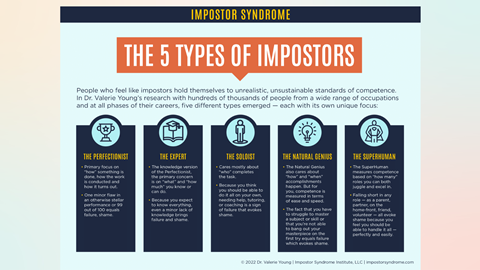
When it comes to orchestra teachers:
The Perfectionist may look like an ensemble director making a conducting mistake during the concert and ruminating on it at night after the concert is over. What would you say to this person or if this is you what would you want to hear?
I would say we have all been in an ensemble before where a conductor may have flung their baton across the room on accident or conducted the wrong pattern, but we laughed it off and continued on. The concert is now in the past, the students were still able to finish the piece (together or not) and everyone applauded.
The Expert may be that a music teacher feels incompetent at introducing a new style because they do not have professional or extensive performance experience in the style. Instead of avoiding teaching this style out of fear of being inaccurate, I would suggest to this teacher to research the topic well enough to do an introductory lesson or deliver their research findings to their students.
If possible, finding a colleague that can work with your students is always a benefit, though not everyone has that luxury. Therefore, try your best to learn alongside your students and prompt them to be curious about researching new styles.
The Soloist can look like an orchestra teacher waiting to ask their admin, students or families for support because they feel like they should be able to do it all by themselves. I would tell them that one of the most beautiful things about orchestra is allowing it to be an outlet for community.
Some students get excited to help hand out new music, or set up the classroom. I have had many conversations with parents who are more than happy to support their child’s musical journey by chaperoning an orchestra field trip or tuning at a concert.
Asking administrators for support can be daunting depending on your relationship with them, though they cannot know how to support you or be understanding of the amazing work you are doing without you discussing it.
The Natural Genius can look like an ensemble director being disappointed with how their concert went because they felt like it should’ve gone smoother. They have done many concerts before so why did this one not go as well? Maybe they forgot to conduct a specific cue or a student played out of tune or at the wrong time.
I would congratulate them on the concert regardless of how it went. Even though it might not feel like a big celebration, it is a big responsibility to be on the podium showing the audience what you have been working on the last few months, and they can take what they learned from this experience and apply it to the following concert.
The Superhuman can look like a music teacher taking on extra roles at school and struggling to find balance with their current responsibilities both inside and outside of school.
For these educators the answer is simple but it never feels simple: ’Just say no.’ This is always hard to hear especially as someone who feels like they have so much to offer, though I would tell them that it is impossible to be effective when you are not meeting your basic human needs first.
Activities for overcoming imposter syndrome
- Define success on your own terms. Ask yourself: ’What does success look like to you?’
- Reframe imposter thoughts. Instead of thinking ’I didn’t deserve it…I got lucky…’ focus on the steps that have led you to where you are. Constantly tell yourself you are deserving of where you are and over time it may become easier to believe.
- Support students in the classroom within overcoming their own performance insecurities, which supports a nurturing classroom culture.
- Start a new hobby or re-kindle an old one.
- Try to really sit with compliments instead of brushing them off.
- Keep a folder of thank-you notes, compliments or letters of recommendation that you can look back at when you need a pick me up.
- Speak to a family member or mentor about how far you have come in your professional and personal growth.
- Reconnect with your instrument, join an ensemble, play your favourite tunes, or perform for your students.
Viviana Garcia was born and raised in Marin County, CA, where she started the violin at the age of nine in her public school ensembles. Since then she has participated in various ensembles and El Sistema-inspired organisations both in New York City and the Bay Area. As an orchestra director, violinist, orchestra teacher team leader and private instructor based in Brooklyn NY, Viviana is dedicated to promoting access to quality music programmes across diverse communities.















No comments yet