






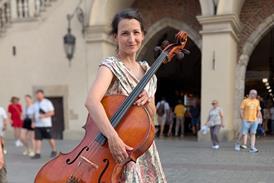








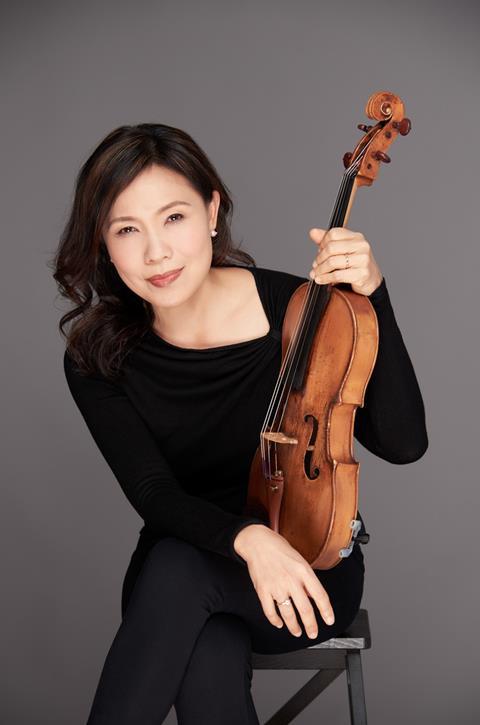
What happens when Mozart adds an extra viola to the already ideal format of the string quartet? Hsin-Yun Huang illustrates how the second violist can enjoy myriad roles in these works as a musical chameleon
Discover more Featured Stories like this in The Strad Playing Hub
’Neither a lofty degree of intelligence nor imagination nor both together go to the making of genius. Love, love, love, that is the soul of genius’ – Wolfgang Amadeus Mozart
Wait! What? Mozart Quintet? Not Quartet?
Back in the early 90s when I entered the Curtis Institute of Music as a freshman, I became fast friends with a cellist and another violist. We decided soon after to form a chamber music group, hence the start of my life journey exploring viola quintets and my first encountering these masterpieces. In two years we laughed our way through all the Mozart, the Brahms, the Mendelssohn and the Dvořák Quintets. This incredibly delightful period was also filled by late night watching of countless silly comedies, weekend trips to Hershey Park for chocolate and wild rides and of course many many homemade desserts.
As a playful genius, Mozart was a virtuosic pianist, violinist on top of being a composer. But according to various historical documents, his favourite instrument to play was the viola. There is something fascinating – and perhaps not entirely accidental – about discovering how many extraordinary composers loved playing the viola in an ensemble, and how so many wrote for this humble, middle-voiced instrument late in their lives.
The string quartet genre was elevated and magnified thanks to Joseph Haydn. Here you have perfect partners that speak in harmony. The format is clear and organized, we deepen into the comfort of a balanced sonority – cello as a foundation, first violin as the obvious solo voice while the second violin and the viola provide the richness, warmth and surprise the listeners with unexpected interplays and texture. Like an organised family, there is a sense of comfort in the way these pieces are constructed and developed in the number of four. We find magic that comes in a group of four – the seasons, the elements, The Beatles!
So what happens when Mozart decides to add an extra viola to this already ideal format?
He opens a door that other composers simply could not.
Unlike Brahms or Mendelssohn, who often expanded their quintets by adding texture, sonority, and heft, Mozart’s viola quintets feel less like a chamber orchestra and more like an expansion of the quartet itself. With the addition of a second viola, the first viola is suddenly liberated. It can dance freely with the first violin, creating an intimate dialogue between two voices. Much like a duo between Papageno and Pamino, or between Don Giovanni and Zerlina, or between Susanna and Countess. The whole dynamic shifts, with infinite possibilities of pairing.
The second viola can couple with the second violin, responding to it in an intimate inner dialogue. It can join the cello, becoming ferocious at the bottom of the sound – or offering an intriguing counter-melody. Tenderly it becomes the most intimate partner with the first viola. There are even occasions where it can disappear almost completely, allowing the other voices to take centre stage.
Starting with the early KV 174 B flat quintet, the character and texture is jovial and dignified. The surprise addition of the mutes in the slow movement captures our ears, it utters a tender question in a hushed unison before a rich unfolding of the drama. The reassuring answer comes with the closure by sheer simplicity and inversion of the same notes.
Then comes the C minor quintet K 406. Here is an arrangement of his wind octet Serenade K388. With the instrumentation and much of the music serving as an outdoor event, the motive is direct and bold as if curtains open at a Shakespeare tragedy. Each movement offers something rather the opposite of what we associate with Mozart’s lightheartedness, unable to lift from the seriousness of the c minor hold. In the trio he does something wonderfully comical: the second viola simply sits out. The other four voices engage in a perfectly poised canon, while the missing viola feels almost like an awkward guest who has stepped away from the conversation – observing from a distance while everyone else continues their civilized exchange.
In the C major quintet K 515, Mozart lets the key be masterful in its own right, middle C which the rest of the universe organises itself around. The characters here are sunny, cheerful and celebratory. Once more the stunning central highlight is in the slow movements. Here is one of the greatest violin viola love duet in the sacred and pastoral F major.
Then comes perhaps one of the greatest masterpieces of chamber music repertoire, the G minor quintet, K. 516. The key G minor has a psychological power for him and was often the choice of key as he confronted personal loss during his lifetime. The extraordinary pathos are expressed through a theme that seems unable to lift, the pain embedded in the chromaticism and a very unusual second theme in the first movement being dragged down to the same home key before winding its way to the relative major.
The menuetto is anything but dance-like and without warning comes the shock of sudden release and unbearable tenderness into the trio. This moment always takes my breaths away because we are simply not ready. This opposing psychological pull lies in the heart of the most profound spirituality in the slow movement. Once again Mozart uses the mutes to bring the voices into unspeakable intimacy and heartaches. The second viola delivers one of the most devastating and iconic responses in the entire viola quintet repertoire. Against the pain and suffering expressed by the first violin, those four declamatory notes in the second viola seem to speak from an abyss beneath the earth.
It is not an accompaniment.
It is another voice of truth.
The D major Quintet K593 was written shortly after his last two ‘Prussian’ Quartets for the King of Prussia who was an avid cellist. Hence all three works enjoyed prominent and leading cello lines. This quintet enjoys unusual poise and gravity without ever losing Mozart’s characteristic mischievous sparks. The expansive and wise slow movement in G reaches an unexplored territory of rare profound emotional depth. As if saying goodbye, the music releases us gently, kindly and forgives us with love.
Then completing the set of 6, his final E flat Quintet K609 begins in pure celebration with two violas. In the horn-hunting opening motives, the music pays tribute to his mentor Joseph Haydn. Unlike the more expansive and epic D major quintet, the E flat quintet feels rustic, witty and concise. With the simplicity of its structure, the 2nd movement ebbs and flows reminiscent of the Romance in Eine kleine Nachtmusik. We encounter sudden Haydn-esque jokelike surprises, unexpected silences and a chaotic fugal ending where for a moment everyone is in the wrong place.
I think the second viola part in a Mozart quintet is quintessentially a chameleon.
It can be the welcomed guest who adds richness, festivity, and playfulness to the party. It can become the mischievous character who suddenly changes the mood. And at other times, it can be the unexpected voice that reveals the dark, undeniable truth of life. It is an invisible bridge that holds everything together—a humble character that rarely draws attention to itself, yet changes everything simply by being there.
And perhaps this is where the joy of being the second violist comes from.
I think the second viola part in a Mozart quintet is quintessentially a chameleon
You are constantly listening, responding, disappearing, reappearing, changing character. You are never simply ‘inside’ the texture. You are part of a living conversation, sometimes leading, sometimes supporting, sometimes provoking, sometimes simply listening.
As in Mozart’s operas these masterpieces open our ears to an extraordinary array of human experiences. Each opera has its own personality, its own dramatic world, its own language. The originality and sheer genius of Mozart keeps drawing us back again and again. There are moments of incredible charm and dignity, moments of devastation and repose. Other times it is giddy silliness, mischievous humour, and the most heartfelt tenderness and love. Through the outrageous comedy of The Marriage of Figaro, the dark thriller of Don Giovanni, the fairy-tale world of The Magic Flute, and the impossibly seductive Così fan tutte. Somehow the experience of exploring the six viola quintets forces an already tightly knit family of five to come together to imagine our own operas.
Often, playing these quintets feels like joining a lively conversation around a Thanksgiving table. Everyone has something to say. Sometimes you speak. Sometimes you listen. Sometimes you interrupt. Sometimes you laugh.
Sometimes you sit quietly and let someone else tell the story. And somehow, without a single word, these six Mozart viola quintets celebrate the extraordinary complexity of being human. Perhaps that is why being the second violist is such a joy.
You are not the centre of attention.
You are part of everything.
Read: Why we should all be violists
Read: Hsin-Yun Huang: Life Lessons
Discover more Featured Stories like this in The Strad Playing Hub




















No comments yet