

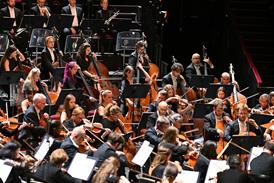
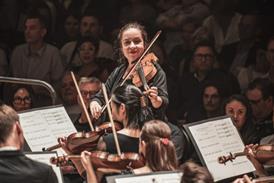






Davina Shum attended the London premiere of the new film at the Royal Festival Hall – how did the actor’s cello playing hold up?
Discover more Featured Stories like this in The Strad Playing Hub
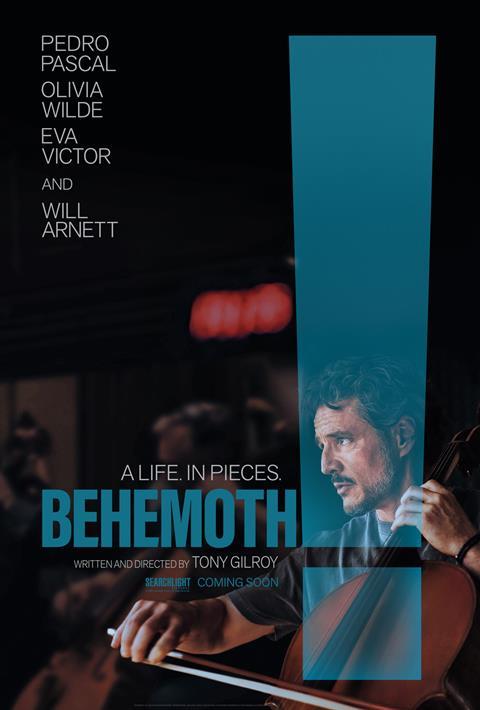
On Tuesday 13 October, I attended the London premiere of Behemoth! – the highly anticipated film written and directed by Tony Gilroy that promised to thrust the film session world into the spotlight – at the BFI London Film Festival.
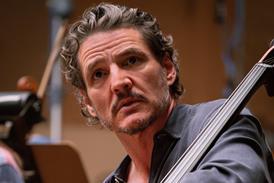
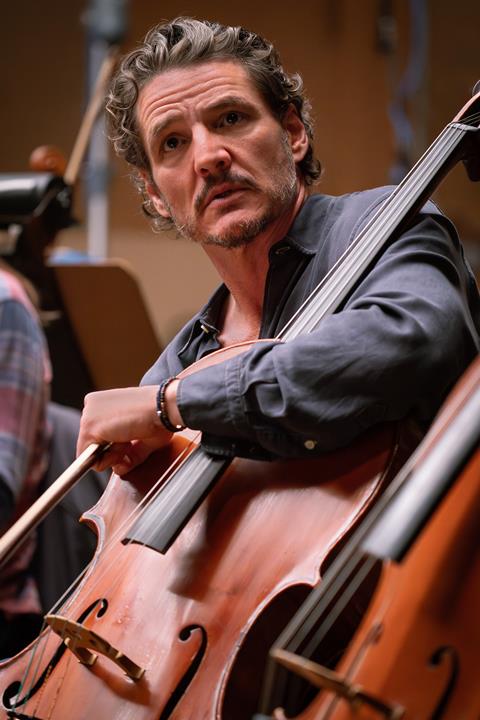
At the heart of the film – and literally in every frame – is the protagonist and cellist, Alex Serian, played by Pedro Pascal. Pascal’s preparation for the role of an orchestral and session musician was well publicised; he cited that learning how to hold a cello bow was one of the hardest things he’s ever had to do for a film, trumping tasks such as combat and stunt scenes in his previous works such as Game of Thrones and Gladiator II.
It’s not often you see a film where the focus is on the classical music world. Before the screening, Gilroy stated how fascinating he found the world of sessions, saying that one of his favourite things to do was to bring new spectators into a recording session, watching seasoned professional musicians bring music to life in the studio, the ink barely dry on the page. After getting the green light confirming Pascal in the lead role, he told him straightaway to ‘get your ass to a cello lesson’ – no mean feat, given that Pascal is seen playing in sessions, orchestral concerts and chamber settings performing a range of genres.
The film itself follows a family drama and the emotional internal journey of Serian, with a non-linear narrative that initially had me questioning my investment with his character. Eventually, as the film flicked between the present-day Serian working as a session musician in Los Angeles, and flashbacks to his past in Dallas, Boston and Chicago, the puzzle of the narrative clicked into place as certain incidental scenes became significant.
The use of film music as a narrative device was an interesting one – often the music featured in one of Serian’s recording sessions would in turn underscore one of his flashbacks. It was a showcase of how a film score can shape a scene and often done in a wry, amusing way: a dramatic score being recorded for a fictional action film in turn accompanied Serian running away from two small, unthreatening Corgis, while a cartoon soundtrack turned what looked like an intense argument between two characters into a hilarious slapstick scene. You got the sense that Serian, used to performing in scores that accompanied Hollywood films, was scoring his own soundtrack to his life, in which he was the main character.
The film employed nine composers to contribute to the score – the ‘Behemoth! Collective’: Alan Silvestri, James Newton Howard, Michael Giacchino, Henry Jackman, Michael Abels, Emily Bear, Nami Melumad, Brandon Roberts and Lukas Frank – all with blockbuster film scores and compositional works under their belts. These composers contributed the musical cues that were recorded in the fictional sessions, a departure from a film composer’s usual remit of creating a score from the screen.
So the burning question, from a Strad reader’s perspective: how was Pascal’s cello playing?
As a cellist myself, I can appreciate the enormity of the task of looking plausible behind the instrument, without a lifetime of training and within the limited time frame of the filming process. There were moments where I was genuinely impressed – Pascal’s left-arm mechanics were surprisingly fluid as he shifted up the A string. And generally, his bow hold looked convincing, though a little stiff when in motion, especially next to the professional musicians in the section alongside whom he was playing.
It was the small details that were slightly bothersome, such as Serian, a co-principal, starting an entrance without breathing or looking at the conductor, or when his left-hand position was visually one semitone out from the rest of the section, hand trembling with awkward vibrato. Of course, these details were glaringly obvious to me through the lens of a cellist, and Pascal’s performance should be regarded with plenty of admiration and grace, given the sheer difficulty and nuance of the task.
Overlooking any details that might curl the toes of any professional cellist or musician, Behemoth! is a drama that is shaped by its soundtrack and offers a largely glamourised glimpse into the world of a musician, both inside the studio and beyond.
Behemoth! is released in UK cinemas on 4 December 2026.











No comments yet