

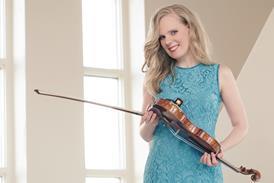




The Dutch violinist on building independence and balancing a busy life and career
Discover more Featured Stories like this in The Strad Playing Hub.
Read more premium content for subscribers here
I have had four main violin teachers in my life, and they couldn’t have been more different from each other in terms of personality and teaching style. My first, Josien Le Coultre, encouraged chamber music and listening. My second, Davina van Wely, had an immensely impressive personality, warm but strict. My memories of her are very special and I still remember travelling to Amsterdam once a week to have lessons at her house on the canals. At the age of eleven I moved to the UK to train at the Yehudi Menuhin School with Hu Kun, with whom I also studied at the Royal Academy of Music (RAM). He gave me a great technical foundation and helped me to find independence. I finished my time at the RAM with Maurice Hasson, who shared so many musical insights with me. I learnt a lot of repertoire with him and always felt incredibly supported. All these teachers were key to both my musical and personal development. For me, these two things cannot be separated.
From a very early age I had the chance to play a lot of chamber music and in many orchestras. These experiences shaped me as both a violinist and human being. It’s crucial for a musician not just to learn about music, but to learn about people. In the end, music making is a deeply human pursuit and your development as a person is a crucial part of building a long-lasting and meaningful life and career.
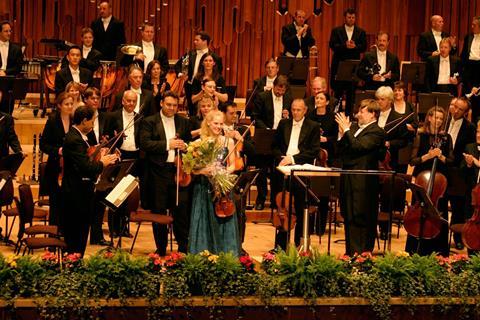
I feel that the transition years between my education and career were my most important period of growth. I had already been building my career throughout my educational years, so it was a natural progression. But I did at times feel somewhat restricted by having a teacher, so once I graduated I made a conscious decision to develop my own voice, insights and interpretation independently. I would still sometimes seek advice on certain repertoire. These were the years where I found confidence and freedom in myself as an artist.
It’s not always easy to find a balance when you have a busy schedule. My main aim is to be strong, both physically and mentally, when on stage. But it is also important to know your limits. Sometimes concert opportunities can be very tempting, but be careful that they don’t throw you off balance. Generally, I’m not afraid to say no and I trust that another opportunity will come up. In the end, finding balance takes active effort; it doesn’t simply happen by itself.
Don’t be afraid to listen to yourself and to forge your own path. Take time to figure out who you are, what is right for you and what really makes you happy, and then live by these things. Work hard, love music intensely, be sincere and trust yourself! We are all different and we should treasure these differences. My best advice for young musicians is to remember why you do what you do. The music always comes first.
INTERVIEW BY RITA FERNANDES
Read: Sentimental Work: Simone Lamsma on Britten’s Violin Concerto
Discover more Featured Stories like this in The Strad Playing Hub.
Read more premium content for subscribers here

![[hasnt been used much] G Hoffman - photo William Beaucardet - a](https://dnan0fzjxntrj.cloudfront.net/Pictures/100x67/0/2/9/44029_hasntbeenusedmuchghoffmanphotowilliambeaucardeta_116713_crop.jpg)






No comments yet