








Kryštof Kohout unearths two pieces by Czech composers Luboš Fišer and Váša Příhoda, ahead of their London premieres at Wigmore Hall
Discover more Featured Stories like this in The Strad Playing Hub
Like many musicians, I find a wonderful and ever-present source of inspiration in the musical heritage of my homeland: the Czech Republic. Though not a big country, it boasts a vibrant and centuries-old tradition of music, and we are extremely lucky to have an immensely rich and diverse body of music to draw from - with a lot of it still waiting to be heard!
Growing up surrounded by this legacy, I developed a passion for unearthing these hidden gems and bringing these voices to life for new audiences, which is always an exciting and rewarding process and now feels like an important part of my artistic identity. Having made London my home for several years now, the opportunity to introduce two Czech works to British audiences for the very first time at Wigmore Hall and bringing these two worlds together feels like both a personal and artistic milestone.
As the recipient of the Guildhall Wigmore Prize, I have curated a programme rooted in the rich tapestry of Central European music for my debut recital at the venue. The programme is inspired by this region, which is a real crossroads of cultures, where Slavic, Germanic, and Magyar influences intermingle and weave together diverse folk melodies, rhythms and romantic spirit.
When my duo partner, Edward Leung, and I began to consider which Czech works to include, our aim was to find ones that would not only be a new discovery for us and the audience, but that would also engage in a living dialogue with the other pieces on the programme – spanning past and present, folk and classical, familiar and undiscovered. Remarkably, both Czech works we have chosen will be UK premieres, adding an extra layer of excitement and responsibility to the performance.
Our fascination with Luboš Fišer’s music has been longstanding, and we had been waiting for the right moment to present his Sonata for Violin and Piano ’Hands’ to audiences. Composed in 1960s, the piece was originally titled Crux – a reference to the Stations of the Cross. However, under the restrictive cultural policies of then-communist Czechoslovakia, the title had to be changed to avoid religious connotations. Instead, Fišer chose to name it ’Hands,’ after a poem by Otokar Březina, outwardly aligned with socialist ideals of labour and perseverance. For the composer however, it was a symbol of prayer and unity.
Beneath the surface of this more politically compliant title lies a deeply dramatic and spiritual narrative. The sonata traces a journey from torment and suffering through a solemn funeral march, evoked by a destiny-like pizzicato passage, reflection, and finally, transcendence – a resplendent apotheosis reminiscing of tolling bells. It is an existential work of raw emotional power, marked by an almost apocalyptic intensity. It is modern, uncompromising, and deeply expressive, challenging both performers and listeners to confront the extremes of human experience.
What fascinates us about exploring ’Hands’ is its unique balance: stark, almost ascetic motifs are juxtaposed with moments of visceral lyricism, reminiscent of Janáček’s language. Despite the scarcity of recordings and scholarly writings on the sonata, I have been fortunate to discuss the piece with violinist and Prague Academy professor Ivan Štraus, who collaborated closely with Fišer on editing and performing the work. His insights and recollections of working with the composer have been an invaluable source of information and inspiration in the process of bringing this music to life.
In striking contrast to Fišer’s existential modernism, Váša Příhoda’s Romance élégiaque inhabits a world full of lyricism, nuance, and romanticism. Composed in the 1920s, it speaks in the tradition of violinist-composers like Kreisler – whom Příhoda knew personally – but with a distinctly Czech voice. The process of discovering Příhoda’s music has been something of an archaeological adventure. His compositions are not widely published or recorded, making the detective work of searching for scores, recordings and historical connections a part of the joy and challenge.
Příhoda was a brilliant virtuoso, famously discovered by Arturo Toscanini, who once exclaimed, ’Paganini could not play better than this young man!’ He was among the first violinists to record Dvořák’s Violin Concerto, and his life and career embodied the cultural currents of central Europe - he was born in South Bohemia, steeped in Czech folk traditions, and spent significant periods teaching and performing in Germany and Austria, absorbing the Germanic musical language.
This blend of influences is evident in both his playing and his compositions. The Romance is a beautiful example of Czech folk idioms fused with the rich harmonies and clear structure of Germanic Romanticism. Its gentle melancholy and singing lines provide a moment of intimacy and nostalgia within the programme, making it a perfect prelude to the Strauss Sonata, which draws on similar influences, but expands them to an almost symphonic scale.
The Romance combines expressive harmonies with song-like simplicity and tenderness. Its gentle melancholy and vocal phrasing evoke a sense of shared memory and cultural continuity, bringing the violin close to the human voice through flexible sound, portamenti and subtle inflections – qualities that make the music both beautiful and profoundly human.
Bringing these two Czech works to the UK for the first time at Wigmore Hall is both a joy and a meaningful artistic responsibility. For us, they represent not only the richness and diversity of Czech musical heritage, but also the dynamic interplay of tradition and innovation that lies at the heart of Central European music. Through Fišer’s searing existential vision and Příhoda’s tender, nostalgic lyricism, we hope to bridge the gap between the familiar and the undiscovered—giving voice to music that speaks powerfully across time, and deserves to be heard.
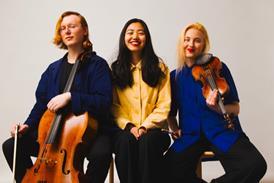
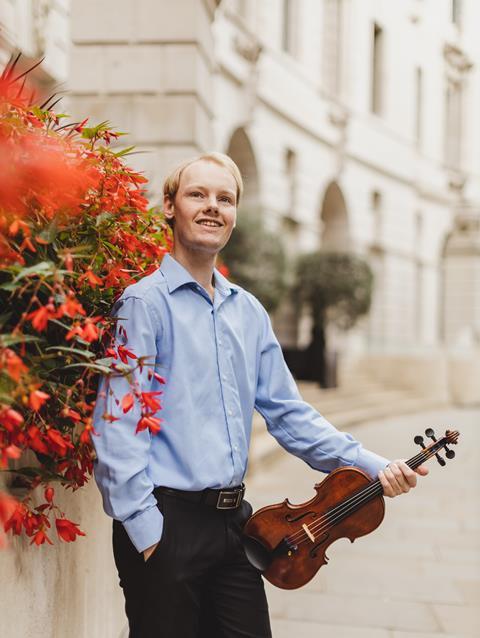
Violinist Kryštof Kohout, winner of the 2025 Guildhall Wigmore Prize Recital, gives the UK premieres of Váša Příhoda’s Romance élégiaque’and Luboš Fišer’s ‘Hands’ on Sunday 27 July with pianist Edward Leung at Wigmore Hall. Kohout is also a founding member of the Fibonacci Quartet, which will perform at the Edinburgh International Festival on Saturday 9 August.
Read: Tanzania’s Daraja Music Initiative: making an impact through conservation and music education
Read: Two anniversaries: the Carducci Quartet on Ravel and Shostakovich string quartets
Discover more Featured Stories like this in The Strad Playing Hub
The number one source for playing and teaching books, guides, CDs, calendars and back issues of the magazine.
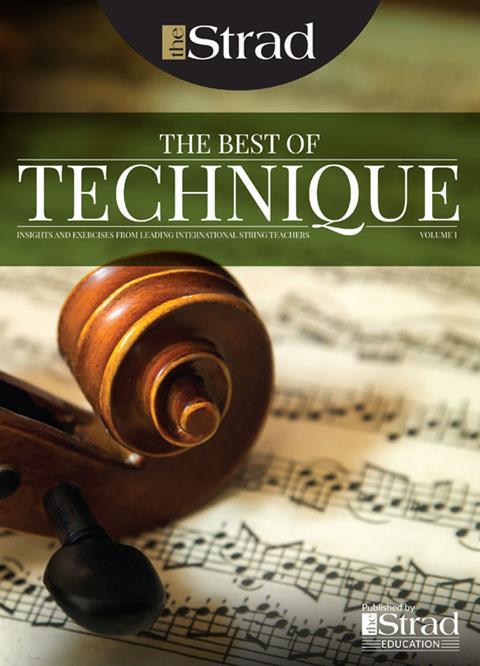
In The Best of Technique you’ll discover the top playing tips of the world’s leading string players and teachers. It’s packed full of exercises for students, plus examples from the standard repertoire to show you how to integrate the technique into your playing.
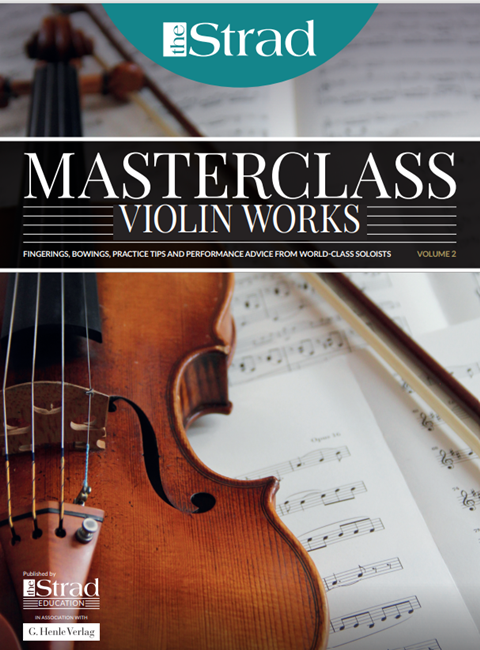
In the second volume of The Strad’s Masterclass series, soloists including James Ehnes, Jennifer Koh, Philippe Graffin, Daniel Hope and Arabella Steinbacher give their thoughts on some of the greatest works in the string repertoire. Each has annotated the sheet music with their own bowings, fingerings and comments.
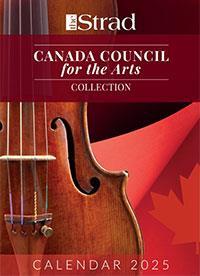
The Canada Council of the Arts’ Musical Instrument Bank is 40 years old in 2025. This year’s calendar celebrates some its treasures, including four instruments by Antonio Stradivari and priceless works by Montagnana, Gagliano, Pressenda and David Tecchler.








No comments yet