


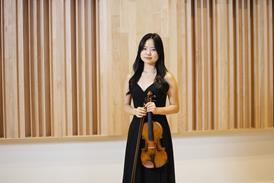

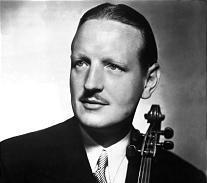
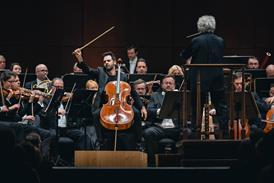
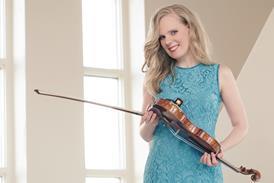









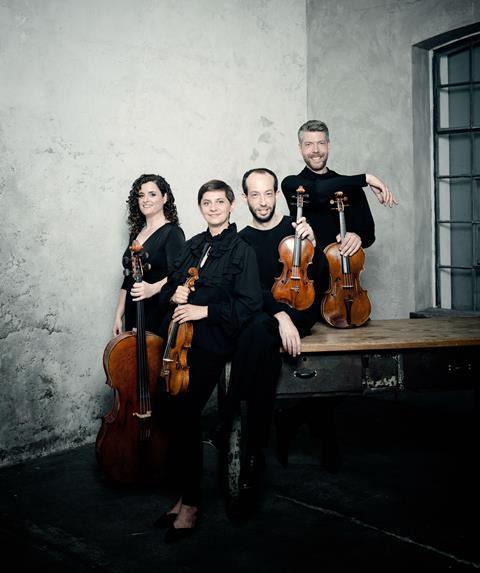
The Ariel Quartet has taken a lifelong journey with Beethoven as the ensemble releases its recordings of the composer’s late string quartets, completing a monumental project. The quartet speaks to The Strad about what the process has taught them about Beethoven, as well as themselves
Read more Featured Stories like this in The Strad Playing Hub
On 2 October 2026, the Ariel Quartet releases its third and final volume of its monumental Beethoven string quartet cycle recording project. Following the first two volumes over the last two years, this third volume includes Beethoven’s late quartets: String Quartet in E-flat major, op.127; String Quartet in C-sharp minor, op.131; String Quartet in A minor, op.132; String Quartet in F major, op.135; and String Quartet in B-flat major, op.130, including the ‘Große Fuge’ op.133.
In 2027, a special box set of the complete string quartet cycle will be released to honour Beethoven’s legacy, 200 years after his death.
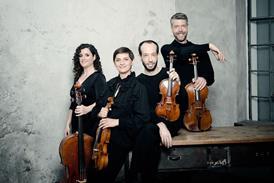
The Ariel Quartet, comprising violinists Alexandra Kazovsky and Gershon Gerchikov, violist Jan Grüning and cellist Amit Even-Tov, has a long history with Beethoven’s string quartets. The group was formed while the members were still teenagers studying at the Jerusalem Academy Middle School of Music and Dance in Israel, and Beethoven’s String Quartet in C minor, op.18 no.4 was the very first piece the young ensemble played together.
With the culmination of a lengthy project, the Ariel Quartet spoke to The Strad about this journey with Beethoven and how it has shaped them over the years.
With the release of this third volume of Beethoven string quartets, you’ve now completed a recording project that spans Beethoven’s entire string quartet output. Looking back over the three volumes, what has this journey revealed to you about Beethoven, and about the Ariel Quartet itself?
What strikes us most, looking back, is just how enormous the world of these quartets is. We’ve lived with Beethoven for a very long time – we’ve performed the complete cycle six times– and yet the process of recording all 16 quartets made us realise again that there is no point at which you can say, ’Now we understand Beethoven.’ Every time you return to these pieces, something shifts. You hear a relationship between voices differently, you question a tempo or an articulation you thought you had settled, or suddenly a passage you’ve played hundreds of times reveals a new character shade.
And perhaps that is what Beethoven has revealed to us: the incredible breadth of his humanity. Across these 16 works there is humour, tenderness, anger, intimacy, stubbornness, despair and an extraordinary sense of possibility. The late quartets can seem almost otherworldly, but after living with the whole cycle, we actually find them deeply human.
For the Ariel Quartet, the project has also been something of a portrait of who we are after so many years together. We have very strong individual personalities and opinions, and Beethoven gives you nowhere to hide – you have to make decisions together about virtually everything. Recording intensifies that process enormously. We don’t think the result represents four people arriving at one fixed interpretation so much as four people learning how to listen, challenge one another, and ultimately speak together while still remaining individuals.
Finishing Volume 3 therefore feels less like reaching the end of Beethoven than documenting where our relationship with this music happens to be at this particular moment. We’re quite certain that if we recorded the cycle again ten years from now, it would be different – and that is exactly as it should be.
It represents four people learning how to listen, challenge one another, and ultimately speak together while still remaining individuals
Volume 3 focuses on Beethoven’s late quartets, works often regarded as some of the most profound and demanding pieces in the repertoire. What were the biggest artistic or technical challenges in recording them?
One of the greatest challenges with the late quartets is actually not to approach them with too much reverence. We all know the mythology surrounding these works, and of course they are extraordinarily profound, but they are also full of humour, physical energy, simplicity, tenderness and at times, almost startling directness. If you begin every phrase thinking, ’This is late Beethoven,’ the music can become weighed down by its own significance.
Technically, these quartets demand an extraordinary degree of flexibility from an ensemble. Beethoven can move within seconds from something incredibly intimate and exposed to music that is almost orchestral in its scale. The four instruments are also profoundly independent – there are passages where each player has an individual voice and trajectory, yet the whole thing still has to breathe as one organism. In a recording, where that independence and every small imbalance become very audible, finding that balance was a constant challenge.
The larger challenge, though, was architectural. In a work like op.130 or op.131, you have to understand where you are over an enormous span of time. A movement or section can be completely convincing on its own and still not be right in relation to what came before or what follows. Recording inevitably breaks these enormous structures into smaller pieces, so one of our main concerns was preserving the feeling of a single journey – the tension, memory and sense of direction that you experience when performing the work uninterrupted in concert.
Perhaps the hardest thing was to combine that long view with spontaneity. We wanted the recordings to contain the detail that the studio allows, without loosing the danger and unpredictability that make this music feel so alive.
You write in the liner notes about how these works continue to evolve through performance and that recording them can feel like ‘capturing a rare creature’. Did making this recording change your perspective on any of the late quartets in a surprising way?
Perhaps the biggest surprise for us was op.135. Because it is Beethoven’s final completed quartet, it is tempting to approach it as a kind of last testament. But the more time we spent with it, and particularly through the recording process, the less it felt that way to us. There is an extraordinary lightness and economy to the piece. After the vast landscapes of op.130, 131 and 132, Beethoven suddenly chooses to say an enormous amount with very little.
Recording also made us increasingly aware of how dangerous it can be to decide too firmly what these pieces ’mean.’ That connects to the image in the liner notes of trying to capture a rare creature. You prepare enormously and develop very strong ideas, but then in performance something happens – a colleague phrases something unexpectedly, a tempo breathes differently, a silence lasts a fraction longer – and suddenly the piece shows you another side of itself.
That was particularly striking throughout the late quartets. The recording process asks you to make choices permanent, while the music itself seems almost to resist permanence. In the end, we became more comfortable with that contradiction. The recording isn’t our answer to these pieces; it is a record of one encounter with them, at one particular point in our lives as a quartet.
With the absence of an audience, what switched most for us was the sensation of being alone with the music in the session. The absence of the audience was no longer distracting, and since this wasn’t a concert situation, it became an incredibly personal experience. It is our hope that this translates through this recording.
Beethoven: The Complete String Quartets Volume 3 is out on 2 October 2026 on Orchid Classics.
Read: Masterclass: Beethoven String Quartet no.11 op.95 ‘Serioso’, first movement
Watch: A lasting relationship: the Ariel Quartet performs Beethoven op.59 no.3
Read more Featured Stories like this in The Strad Playing Hub













No comments yet