






Jonathon Brown reports from the finals, where no first prize was awarded this year
The great musicologist Hans Keller liked to divide violin concertos into two groups: those that are fiddle concertos, and the rest. His preference was clear – that neither composer nor player should lose sight of the ruddy or rustic origins of the instrument, the horse-hair and cat-gut thing.
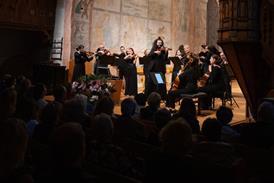
In competition play that parameter can be diffused, since few competitors are inclined to risk going through their tone in some Gypsy frenzy. So it was on Saturday 14 November, at the finals of the 2026 Long–Thibaud Competition, held in the splendour of the Théâtre des Champs Élysées in Paris, with four players – and two performances each of the Tchaikovsky and Sibelius concertos.
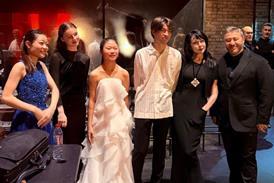
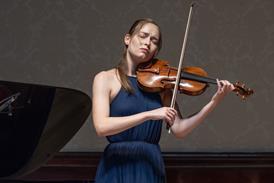
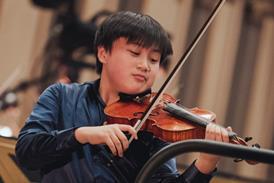
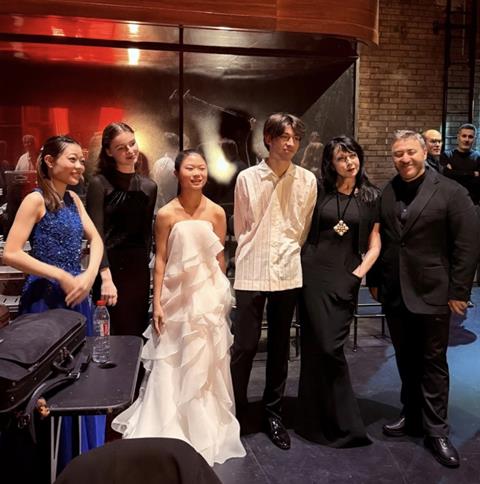
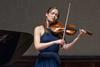
All in all, the violin triumphed over the fiddle. Marika Konishi (Japan, b.2007) opened the event with a loving but somewhat generalised account of the Sibelius, able to make breathings at speed but without a sense of the alarming swerves of sanity lurking in the score. She was followed by Jenny Hyeonjeong Lee (South Korea, b.2010) with the Tchaikovsky. Except to engage the conductor effectively as if in chamber music, she kept her eyes mostly closed and displayed a sense of dance and cumulative phrasing that was very fetching. Her first movement was applauded. Of all the finalists she seemed most prone to dramatic gesture, in which we did indeed glimpse the fiddle, though her physical flourishes were, alas, masked by a voluminous haute couture dress; nonetheless, of all the finalists she also, to my ears, displayed the greatest variety and individuality.
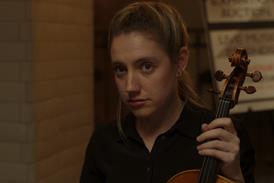
After an interval came Stefania Pospekhina (Russia, b.2007), with Tchaikovsky. Statuesque in presence, like Heifetz, she constructed an austere melancholy with unfussy, concentrated playing and a long-thought-out reach across the score until, towards the very end, a sort of sunlight infused her expression. There was an impressive momentum, a sense of journey, yet it was somehow unexpectedly ‘professional’ and without danger. A similar hit-man cool infused the Sibelius by Francesco Papa (Italy, b.2006), with decisive phrasing yet, again, none of the submerged madness that makes this piece so disturbing.
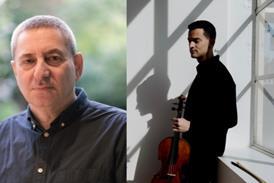
True to his humane character, Gérard Bekerman, president of the Long-Thibaud Foundation, with a distinguished record of awarding ‘equal’ prizes – ex aequo as he has it – insisted that two of the eliminated semi-finalists were given a slot in the final gala presentation: Toma Bervetsky from Ukraine and Ruifeng Lin of China (both b.2000), playing fiendish arrangements by Nathan Milstein. To think that they lost out to the four finalists is tribute to the standard of the event.
There are many sponsors, including the Fondation BNP Paribas, the Ville de Paris, the Fondation Prince Albert II de Monaco, the Caisse d’Epargne Ile-de-France and the Paris Rotary Club. As for the many prizes, firstly, the newly instituted special prize of the Paris Conservatoires Network was awarded to Pospekhina, who also won the orchestra prize and audience prize. The press prize went to Papa. These special prizes come with no financial reward but the Foundation offers all the winners a number of years of support in the form of professional encouragement for recitals, recordings and even the loan of instruments.
Thereupon the jury (which comprised president Silvia Marcovici, Maxim Vengerov, Gidon Kremer, Boris Kuschnir, Mihaela Martin, Nathan Mierdl, Gérard Poulet, Vera Wiling Tsu and Pavel Vernikov) awarded its prizes, which were presented by Maxim Vengerov and Gérard Poulet. First came… you guessed it! – ex aequo Pospekhina and Papa, both awarded ‘second equal’ as if in a magical gesture of aesthetic justice. The prize money was adjusted to €15,000 each. Then came Lee (€12,000) followed by Konishi (€8,000).
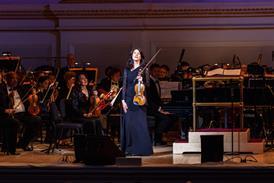
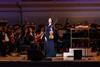
A word for the Orchestre symphonique de la Garde républicaine and its conductor Bastien Stil, himself a grand-pupil of Marguerite Long, taxed with two performances apiece of the two concertos and a reprise of final movements with the two winners at the gala that ended the day. They appeared in full military regalia that belied a finely flexible ability to attune to their young soloists, the woodwind especially nuanced and the cellos wisely positioned for violin concertos as the third quadrant rather than at the stage edge. Stil’s understated sensitivity was in itself a lesson, the constant that held together an entirely educative, enjoyable event.






No comments yet