






![Ayanna Witter-Johnson [Jordan Woods] 7](https://dnan0fzjxntrj.cloudfront.net/Pictures/274x183/4/9/4/44494_ayannawitterjohnsonjordanwoods7_224583.jpg)







The Strad speaks with members of the award-winning trio, which has been selected as Young Concert Artists’ first ensemble-in-residence

Read more Featured Stories like this in The Strad Playing Hub
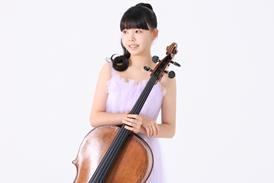
Trio Azura has been selected as Young Concert Artists’ (YCA) first ensemble-in-residence. The ensemble consists of Canadian violinist Duncan McDougall, South Korean cellist Yejin Hong, and Chinese pianist Yanfeng (Tony) Bai – who came together as a trio in 2022 when all three were studying at the Colburn School of Music in Los Angeles.
The award-winning trio won the 2024 Fischoff National Chamber Music Competition. As part of its YCA residency. the group will enjoy a three-year programme that gives them access to career support, industry connections and performance opportunities.
The members of Trio Azura spoke with The Strad about finding each other, the challenges of success away from home, and what informs their collective artistic vision.
How did the three of you first meet at the Colburn School, and what drew you together as a trio?
We met at Colburn through classes and rehearsals, but what really brought us together was a genuine connection beyond the music. We appreciated each other not only as artists, but as people. There was an ease, a sense of trust, and a lot of laughter, and honestly, we knew that making music together would be meaningful and a lot of fun! We are so lucky to have found each other.
What was the initial spark that made you decide to form Trio Azura in 2022?
The spark came from realising how deeply we all love chamber music and how aligned our goals are. We shared a strong desire to commit ourselves seriously and to build something lasting together.
Forming Trio Azura felt like a very natural next step, and it gave us a way to bring together our passion, mutual trust, and shared goals, and to build a collective artistic identity as a career we truly believe in.
How do your diverse cultural backgrounds influence your approach to music-making?
When we approach a piece, each of us brings a unique perspective to the table. Although we may each search for different ways of understanding and bringing the music to life, our diversity is a strength that allows us to unite and strengthen our musical vision, and to create a cohesive whole.
Each of you chose to study abroad. What motivated that decision, and how has it shaped your artistry?
Tony Bai: After spending nine years studying at a conservatory in China since primary school, I was fortunate to become a successful young pianist. I just felt it was time to embrace a new challenge. I wanted to participate in a musical community in the United States with many talented musicians from the whole world and important opportunities for artistic growth.
Duncan McDougall: I moved to Los Angeles from Ontario, Canada when I was 19. What drew me here was the opportunity to study at the Colburn School with my professor, Martin Beaver. His guidance and inspiration, along with the support and abundant opportunities from Colburn, has allowed me to grow into the artist I am today.
Obviously, it was eye-opening moving from a small town in Canada to Los Angeles. The past five years here have shaped me in ways I did not expect, but I am grateful for every rewarding and challenging experience. I only wish LA had a true winter…
Yejin Hong: I have always had a strong desire to learn, and I wanted to step out of a comfortable and stable environment to gain a broader musical perspective. Before focusing solely on becoming a better musician, I also wanted to grow as a person.
During my time studying abroad, I had incredibly valuable experiences, working with people from diverse backgrounds and perspectives. It taught me to listen more deeply, collaborate more thoughtfully, and bring greater sensitivity and sincerity to my performances.
What challenges and opportunities have you encountered as musicians working internationally?
Yejin: As a naturally introverted person, I’ve always tried to put myself in challenging situations, but meeting and communicating with many people can still be difficult. Since English is not my first language, expressing myself hasn’t always been easy. Still, through these experiences, I’ve gained confidence and continue to discover new strengths as both a musician and a person.
Tony: Those are very realistic concerns. Visas – especially for me as a Chinese citizen – are a major challenge. The time spent on applications and waiting adds a great deal of uncertainty. Travel itself is also demanding: jet lag, driving for hours in the middle of the night, going to completely different places, and being away from home. In fact, I was only able to spend five days at home with my family this past summer. But I truly love traveling, because the experiences and friendships that come with it are pure gold to me.
Duncan: The question of where I’ll be based in the future is almost always on my mind. I love the community I’m part of here in Los Angeles, and I would not trade it for anything, but I also really miss home and being close to my family. As musicians, we have to be open to living where the opportunities and network are best for us, and this can definitely be challenging. But I am happy and lucky to be where I am in my life right now, and I’m excited to see what the future holds!
How does it feel to be selected as YCA’s first ensemble-in-residence? What does the YCA Jacobs Fellowship mean for your career trajectory as a trio, and how do you see YCA’s support impacting your future projects and collaborations?
We are elated, honoured, and grateful to have been selected as YCA’s first ensemble-in-residence!
Through guidance, mentorship, and support, the YCA Jacobs Fellowship will help strengthen our understanding of the music industry, hone our artistic voice, and build a wider network within the community. To have the experience and expertise of the YCA team during the formative years of our chamber music career will prove invaluable in establishing ourselves in the professional world.
The YCA roster gives us a platform to greatly increase our visibility as artists; looking through the YCA alumni roster, we see all the names of our greatest idols –which inspires and motivates us to continue on our journey.
We feel a strong sense of responsibility to grow, create, and share; and we cannot wait to collaborate and learn from the other incredible artists on the roster. We look forward to all the enriching musical opportunities to come!
How do you choose your repertoire and what informs these choices?
We select repertoire that reflects our individual sensibilities and characters as musicians, while also aiming to present a wide stylistic and musical range. We enjoy programming works from Baroque to contemporary, approaching each style with equal passion and commitment.
Are there any upcoming performances or projects you are particularly excited about?
We’re thrilled about our upcoming debuts in New York and Washington, as well as the release of our debut album, which is currently in the making. Both opportunities are exciting highlights that we can’t wait to share with audiences!
Applications are now open for YCA’s 2026 Susan Wadsworth International Auditions and Jacobs Fellowship - find out more at https://yca.org/auditions/
Read: Arnaud Sussmann: the importance of chamber music across generations
Read: Bella Hristova: Milestones with Jaime Laredo at Carnegie Hall
Read more Featured Stories like this in The Strad Playing Hub



![Ayanna Witter-Johnson [Jordan Woods] 7](https://dnan0fzjxntrj.cloudfront.net/Pictures/100x67/4/9/4/44494_ayannawitterjohnsonjordanwoods7_224583.jpg)







No comments yet