








Richard Linnett reports back from the Santa Fe Chamber Music Festival, which presented a showcase of classics mixed with modern and ’newish’ music
Discover more Featured Stories like this in The Strad Playing Hub
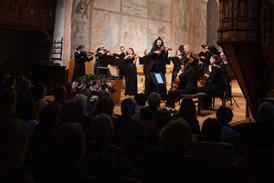
’Why me? I’m not a string player,’ said composer and pianist Mark Neikrug flashing a wry smile when asked to do an interview with The Strad. He was holding court in the foyer of the Lensic Theatre, Bach and Boccherini concertos on the marquee, one of the last remaining performances of the 2025 season of the Santa Fe Chamber Music Festival, which he has programmed as its artistic director since 1998.
The festival this year featured 61 string players out of 96 performers, including keyboards, winds, horns, percussion, vocalists and one actor. Neikrug is also the composer of acclaimed concertos for violin, viola, cello and guitar, and was the long-time touring and recording partner of Pinchas Zuckerman.
Neikrug is credited with transforming this festival from a traditional gathering launched in 1972 with Pablo Casals as its honorary president to an adventurous showcase of classics mixed with modern and ’newish’ music, and daring theatre. When a compliment was made in passing about his innovative programming, Neikrug shrugged and replied. ’I’ve heard that before, and my only reply is, most every other festival chases after the audience. I don’t.’
Highlights of the 2025 Santa Fe Chamber Music Festival included violinist Leila Josofowicz and cellist Paul Watkins performing Latticework, a festival co-commissioned piece by Sean Shepherd, paired with Ravel’s surprising Sonata for Violin and Cello. Surprising, in that the Ravel was as lean and crisp as anything in the contemporary repertoire.
Composed last year, Latticework was influenced by Ravel’s 1920-22 masterpiece and each echoed one another in the vibrant counterpoint of the two instruments, with some extraordinarily lively and percussive pizzicato work. Well-known for her intense execution, Josofowicz seemed possessed and was as entertaining as the music, grinning toothily like a Cheshire cat and wincing as if bitten by a bug during the fiery moments.
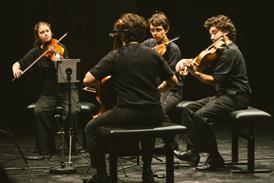
The Jack Quartet’s two-night stand was another standout. The first night was modern and stringent, a powerful flexing of the group’s intellectual muscle. In Anthony Cheung’s Twice Removed (1984) a piece inspired by architecture and abstract expressionist art, the strings shrieked in pain before melting into near silence, with pizzicato counter point, plucking and clucking like a henhouse riot.
Another homegrown commission followed, hatched in the festival’s young composers mentorship workshop …echoes of river and mist… by Tyson Gholston Davis, felt like the fifth movement of Cheung’s piece, a very capable and austere coda.
Another mentorship participant, Ania Vu, lightened the mood with a birdsong inspired Unveiling before Jack dove deep into Helmut Lachemann’s String Quartet No. 3, ‘Grido’. Grido indeed. The piece was a long, relentless and cathartic cry, strangely satisfying but leaving one, at the end of the night, yearning for a rondo, or at least anything tuneful.
Jack delivered on song the following night with a series of renaissance and medieval pieces, actually modern arrangements by founding member Christopher Otto, proving that what is new can be reborn and revitalised by what has come before, in this case ballades from the Chantilly Codex, a collection from late 14th century Southern France. Otto’s reworkings took the original rhythmic patterns of these pieces, echoing modern compositions, and demonstrated how their colorful melodic and harmonic cores rise to the surface effortlessly, organically.
A lesson learnt for contemporary composers, who also were represented in the Jack programme, Juri Seo with her spirited rondeau Three Imaginary Chansons, inspired by late Medieval ars subtilior music and Caleb Burns whose Contritus updated early music and viol consorts for a modern Catholic prayer of contrition.
Finally, the Bach Double Violin Concerto, top billing and highly anticipated on one of the last nights of the festival. Apologies for the pop music reference, but it was an upset, like the Rolling Stones outdone by their opening acts. The Double, featuring two lead violins, in this case wunderkind Chad Hoopes and Dover Quartet’s Bryan Lee, is the classical equivalent (continuing the pop imagery) of two virtuoso lead guitars in a rock band, a very rare and sublime thing.
Think Duane Allman and Dickey Betts trading sweet licks ’In Memory of Elisabeth Reed,’ doubling the melody and harmony lines, and providing counterpoint. The Bach performance was precise and energetic but lacking in spirit and verve, that is until the last movement, when finally the young artists played with true feeling and joy.
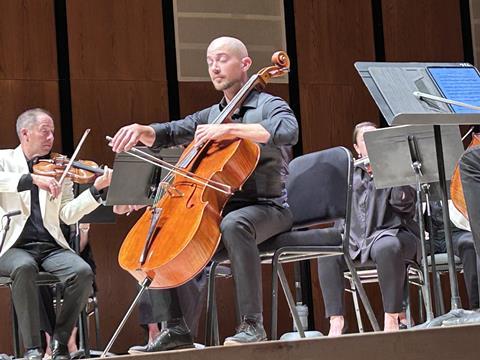
Meanwhile, back at the start of the evening, Dover’s gifted and athletic cellist Camden Shaw played Boccherini’s Cello Concerto in B flat major with the passion of a true believer. Eyes closed, no sheet music, rhapsodic focus, Shaw sat centre stage in front of the chamber orchestra, but in his privileged position constantly turned to his bandmates, eyes opened only for them, looking not just for cues but for camaraderie and love, a collaboration of heart and soul, transforming a piece of standard repertoire into a soaring flight of angels.
Dover co-founder and violinist Joel Link followed with Bach’s Violin Concerto in A Minor. Arguably a stepchild to the Double, Link singlehandedly placed the piece on equal footing in the pantheon, from minor to major Bach. He played with total mastery and warmth, his fluid performance dancing sensuously above the famous grinding ostinato of the second movement like a ballerina floating above churning waters. Not for nothing, Link was recently named concertmaster of the Cleveland Orchestra, so very well deserved.
In closing, with yet another pop culture metaphor, this time baseball: the Bach Double was yes a double, the A Minor was a triple and the Boccherini a game-winning homer.
Read: Santa Fe Pro Musica Season Finale: Conviction and Confidence
Read: Staying power: US String Quartets
Discover more Featured Stories like this in The Strad Playing Hub
The number one source for playing and teaching books, guides, CDs, calendars and back issues of the magazine.
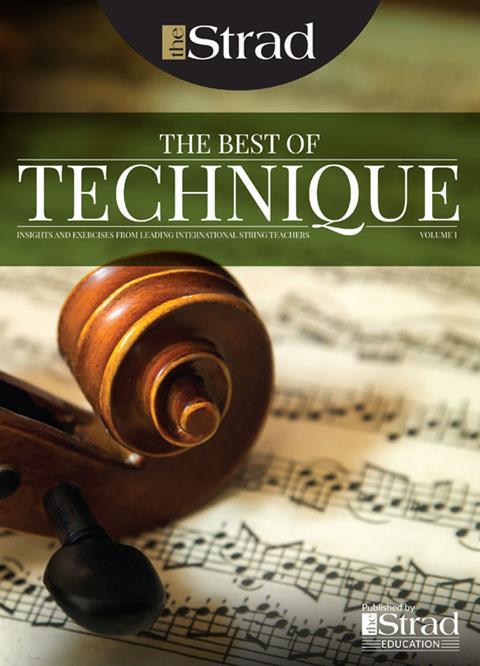
In The Best of Technique you’ll discover the top playing tips of the world’s leading string players and teachers. It’s packed full of exercises for students, plus examples from the standard repertoire to show you how to integrate the technique into your playing.
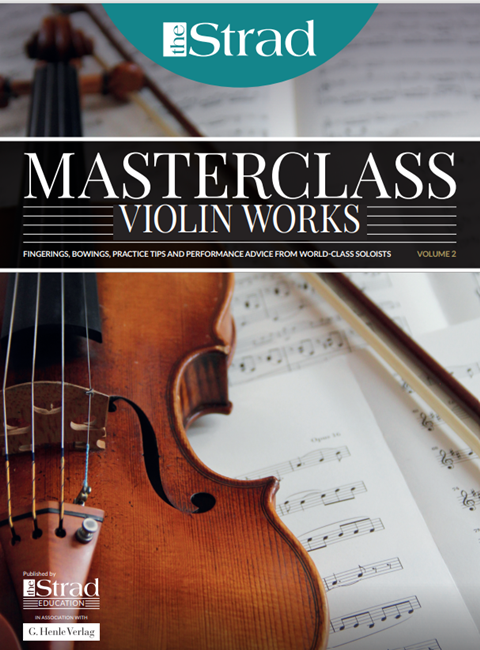
In the second volume of The Strad’s Masterclass series, soloists including James Ehnes, Jennifer Koh, Philippe Graffin, Daniel Hope and Arabella Steinbacher give their thoughts on some of the greatest works in the string repertoire. Each has annotated the sheet music with their own bowings, fingerings and comments.
The Canada Council of the Arts’ Musical Instrument Bank is 40 years old in 2025. This year’s calendar celebrates some its treasures, including four instruments by Antonio Stradivari and priceless works by Montagnana, Gagliano, Pressenda and David Tecchler.


![Ayanna Witter-Johnson [Jordan Woods] 7](https://dnan0fzjxntrj.cloudfront.net/Pictures/100x67/4/9/4/44494_ayannawitterjohnsonjordanwoods7_224583.jpg)






No comments yet