









US correspondent Thomas May returned to Music on the Strait, a chamber music festival on Washington State’s Olympic Peninsula, where voice and strings shared the stage before a second day devoted to instrumental chamber music
Read more Featured Stories like this in The Strad Playing Hub
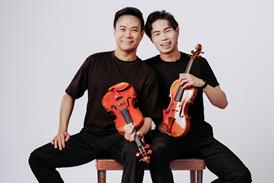
Music on the Strait (MOTS) has always been a festival shaped by string players. Founded in 2018 by violinist James Garlick and Takács Quartet violist Richard O’Neill – longtime friends both raised on Washington State’s Olympic Peninsula – MOTS brings chamber musicians from the international circuit to the Peninsula’s largest population centre, overlooking the Strait of Juan de Fuca towards Vancouver Island. Between concerts, it’s easy to slip away for a few hours into the surrounding Olympic Peninsula, from the Elwha River valley to the coast.
What began as a single summer weekend has grown into two in late August, with occasional additional concerts at other points in the year. Since the handsome waterfront Field Arts & Events Hall opened in 2023, MOTS has also had a larger Port Angeles venue to complement the intimate Maier Hall at Peninsula College. I returned for the first of the two 2026 weekends, on 22–23 August; the second weekend featured the Takács Quartet, of which O’Neill is the violist, and pianist Jeremy Denk.
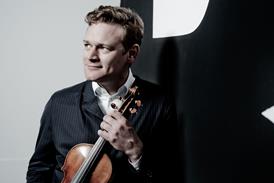
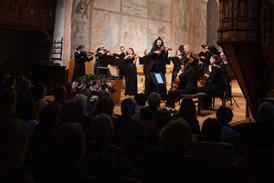
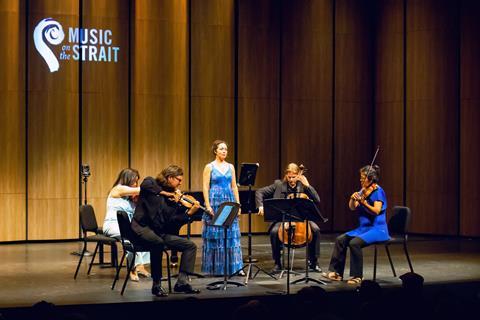
Opening night at Field Arts & Events Hall introduced a novelty for MOTS: a programme billed as ‘A Night at the Opera’, its first journey into the operatic world. Yet the string quartet remained central to the conception. Mezzo-soprano Abigail Nims was joined by violinists Garlick and Kristin Lee, a member of the Chamber Music Society of Lincoln Center, Saint Paul Chamber Orchestra principal violist Maiya Papach and Minnesota Orchestra associate principal cellist Silver Ainomäe in two works that explored very different relationships between voice and string quartet.
Respighi’s Il tramonto exploits this still unusual medium. He wrote it in 1914, before the Roman tone poems that made his name and only six years after Schoenberg had famously introduced a soprano into the final two movements of his landmark Second String Quartet. Respighi reverses a familiar musical metaphor: we often speak of string writing as ‘vocal’, but here he folds the voice into the string texture, shaping Nims’s line as another strand within an integrated chamber ensemble.
We often speak of string writing as ‘vocal’, but here Respighi folds the voice into the string texture, shaping Abigail Nims’s line as another strand within an integrated chamber ensemble
Respighi sets Roberto Ascoli’s Italian translation of Shelley’s 1816 poem The Sunset, a metaphysical Romantic meditation, sensuous in its imagery and edged with Gothic darkness, in which the ecstasy of two lovers gives way to the young man’s unexplained death and the woman’s lifelong grief.
The balance seemed ideally judged here. Four individual string voices could generate plenty of weight for Respighi’s chromatic harmonies without overwhelming Nims, whose line remained integrated into the chamber texture rather than set apart from it. Garlick’s eloquent first violin at times took the expressive lead, while elsewhere the quartet sharpened Respighi’s often declamatory treatment of the text. Nims brought compelling dramatic instincts to her delivery, not least in the stark moment when the woman discovers her lover ‘dead and cold’ (with the order reversed as gelido e morto in the Italian version).
The evening’s most direct operatic connection came with Gabriela Lena Frank’s El mundo, a six-minute aria from El último sueño de Frida y Diego, heard here in the world premiere of Frank’s MOTS-commissioned version for mezzo-soprano and string quartet.
Frank has served as MOTS’s composer-in-residence for the 2025 and 2026 seasons, becoming a familiar presence for its Port Angeles audience. She won this year’s Pulitzer Prize in Music for Picaflor: A Future Myth, a symphonic work inspired by Andean mythology and climate catastrophe. Beforehand, Joshua Gailey – Seattle Opera’s communications and public engagement manager and himself raised in Port Angeles – gave an illuminating introduction. Seattle Opera, a community partner of MOTS, will present the full opera in January 2027.
Since its 2022 world premiere at San Diego Opera, El último sueño has travelled to several major US houses, including the Met this past season. Nilo Cruz’s Spanish-language libretto uses the Day of the Dead to reverse the myth of Orpheus and Eurydice: Frida reluctantly crosses from the Underworld for a single day among the living, then guides the ailing Diego back with her as he accepts his mortality.
El mundo depicts Frida early in the opera, resisting the summons to return to the world of the living. Having escaped the physical and emotional torments of her earthly life, she sees little reason to return; only later does the prospect of painting again tempt her back.
Here, the relationship between voice and strings was quite different. El mundo began life as an orchestral operatic aria, and Frank’s new scoring assigned four string players functions originally spread across the orchestra. A gifted orchestral colourist, she translated that palette into the more concentrated medium of the string quartet, retaining her intensely individual approach to folk allusion and distinctive harmonic language. The reduced forces brought Nims’s vocal presence into sharper focus.
Frederic Rzewski’s Winnsboro Cotton Mill Blues – commandingly played by the young Seattle-born pianist August Baik, now based in Boston – provided a bracing solo contrast, as its grinding mechanical repetitions gave way to the workers’ song buried within them, turning the piece’s evocation of industrial oppression towards resistance and hope.
Baik then joined the strings to conclude the programme with Dohnányi’s Piano Quintet No. 1 in C minor, Op. 1, the astonishingly assured work of a composer still in his teens. There was something operatic here, too, in the sweep and ardour of Dohnányi’s youthful Romanticism. Lee led the strings with particular fire, while Baik blended naturally into the ensemble, bringing character to the piano writing without overwhelming the strings. Dohnányi already had a knack for metrical games and sleight of hand, which the five players pulled off deftly.

The following afternoon brought a change of scale and atmosphere at Maier Hall on the compact Peninsula College campus, just uphill from downtown. The 130-seat room has a warm, immediate acoustic and an almost domestic intimacy, placing listeners close to every shift of balance. Classical KING FM’s Lisa Bergman, whose vivid pre-concert introductions are an attractive feature of the festival, again spoke before the concert.
There were two additions to the roster: Seattle Symphony principal flutist Demarre McGill and Minnesota Orchestra principal violist Rebecca Albers. McGill joined Garlick, Papach and Ainomäe for Mozart’s Flute Quartet in D major, K285. His bright, unfailingly lyrical tone brought an easy cheerfulness to the outer movements, its colour standing out beautifully against the warmer grain of the strings. The B minor Adagio was all the more striking for the contrast, its long flute line turning plaintive over the strings’ pizzicato accompaniment.
The discovery of the afternoon for me was Bloch’s 1924 Violin Sonata No. 2, ’Poème mystique’. Lee gave an enthusiastic introduction to the score’s unusual spiritual mixture: material drawn from Bloch’s Jewish musical world appears alongside Gregorian chant, including the Credo and Gloria.
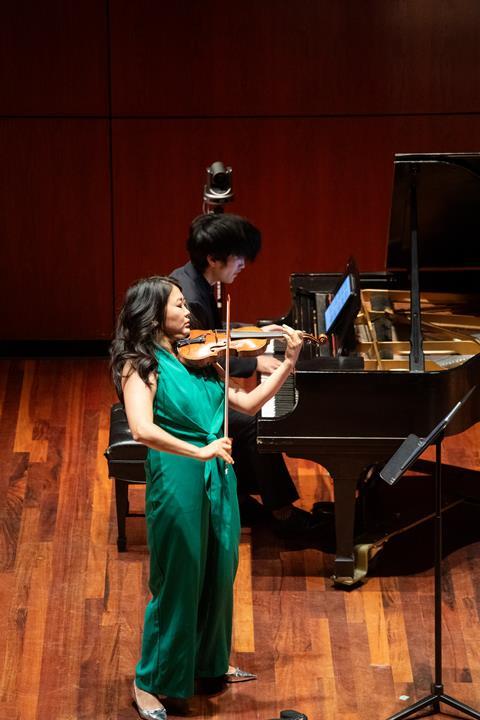
Lee’s performance with Baik made a compelling case for the single-movement sonata, catching its dreamlike, otherworldly quality in soaring reveries as well as its sudden turns towards songfulness and passion.
Dvořák’s String Quintet in E flat major, Op. 97, ‘American’ closed the first weekend with an irresistible surge of life. Rebecca Albers joined Papach to give the quintet its distinctive two-viola richness, adding depth and resonance to the ensemble’s inner voices. The performance conveyed a terrific sense of joie de vivre, underscored by the generosity of Dvořák’s melodies and the rhythmic verve of the playing, sending the audience out of the first weekend on a genuine high.
Read: Postcard from California: Ojai Music Festival
Read: ‘The journey itself, rather than just the goal’: Cristian Măcelaru on the Enescu Competition
Read more Featured Stories like this in The Strad Playing Hub












No comments yet