






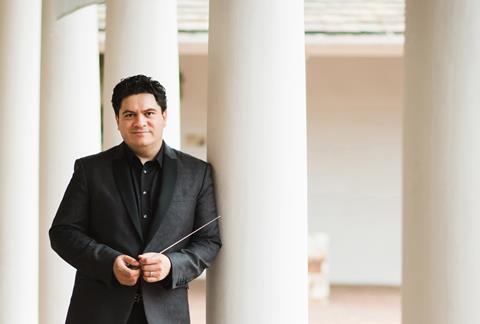
Artistic director Cristian Măcelaru discusses how the George Enescu International Competition is evolving to support young musicians beyond the pursuit of prizes.
Read more Featured Stories like this in The Strad Playing Hub
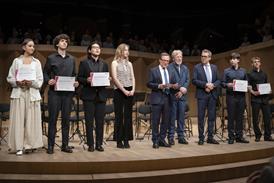
The George Enescu International Competition opens in Bucharest on 23 August and runs through 19 September, with divisions in violin, cello, piano and composition. This year marks its 20th edition. Founded in 1958 alongside the George Enescu International Festival, the competition became a separate biennial event in 2014 and now alternates with the festival. Its past winners include Radu Lupu, Nemanja Radulović and Zlatomir Fung.
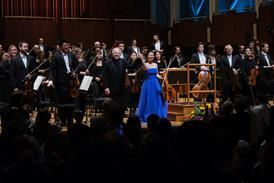
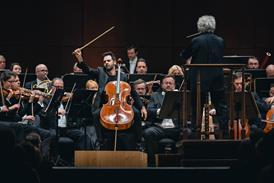
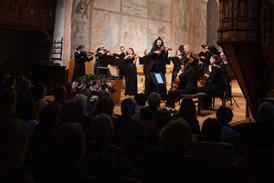
Up to 50 players are selected for each instrumental division. The early rounds take place at Bucharest’s National University of Music, with the semi-finals and finals moving to the Romanian Athenaeum. One of this year’s most notable changes comes in the semi-finals, where competitors will lead the Radio Chamber Orchestra from their instruments in a play-conduct format.
Enescu’s music is woven through the competition, with special prizes in the violin, cello and piano divisions for its interpretation. But the event has been broadening its focus beyond the competitive rounds. This year there are masterclasses in instrumental performance, conducting and composition, together with sessions on stage presence, professional development and musicians’ well-being.
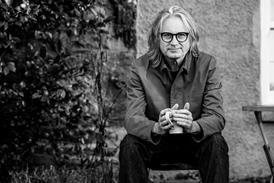
Cristian Măcelaru, artistic director of both the Enescu Festival and Competition, is overseeing the competition for the third time. Ahead of the opening, he spoke to US correspondent Thomas May about playing Enescu, musical leadership and what competitions can offer young musicians once the judging is over.
This is the competition’s 20th edition and the third under your artistic leadership. What makes it distinctive today?
Cristian Măcelaru: For the 20th edition, we have expanded the scope of the workshops and masterclasses quite a bit, including a composition masterclass alongside the conducting masterclass. The entire focus is on the idea of the ‘pursuit of excellence’ as the main goal of the competition, beyond the value of the competition in and of itself. It’s an encouragement towards education, an impetus for people to deepen their knowledge, understanding and appreciation of the art form.
At the same time, we have changed the semi-final round to include a play-conduct format with the chamber orchestra, conducted by the competitors themselves, who lead from their instruments. It’s quite a different approach to performing as a soloist, so they will come away with a much more rounded understanding of the role of the soloist as a leader.
Enescu’s music plays an important part in both the violin and cello divisions. What can it reveal about young players?
Cristian Măcelaru: An understanding of Enescu’s music in all the rounds, including the piano round, is very important to us because at the heart of the Enescu Festival and Competition is the mission to promote Enescu’s music around the world. I think it’s important for us to identify candidates who are able to understand Enescu’s extremely complex style of writing.
At the same time, they need to find a way to channel that complexity into a beauty and musicality that shine through when the music is performed at its best, so that it can even sound as though it is organically improvised. This is Enescu’s style, and I think the candidates who are able to achieve this, and to convince the jury members of their knowledge of this stylistic approach, will be the ones who emerge successful.
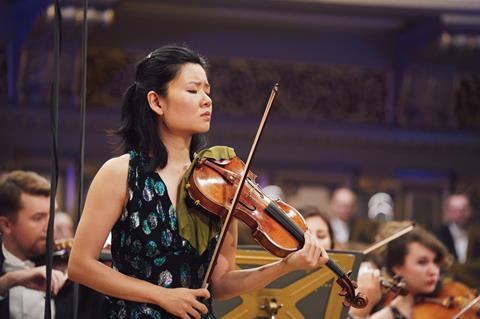
The semi-finals use a play-conduct format with chamber orchestra. What can that show the jury that might not emerge in a recital round?
Cristian Măcelaru: The semi-final round, which focuses on the play-conduct format with the chamber orchestra, will definitely reveal to the jury an artist who is ready for a more mature career and a more mature approach to performing, enabling them to take on a much more important leadership role in performance.
Often, a soloist will focus on their own part, but in this format they have to understand everything that is happening on stage so that they can make music on a much deeper level. I think this semi-final round will be very telling in allowing the jury to distinguish the maturity of the different candidates.
Competitions are sometimes criticised for rewarding polish more than personality. How do you make room for individuality and artistic risk?
Cristian Măcelaru: For us, and for me personally, the choice of repertoire is one factor that can distinguish one individual from another, because it shows their personality and proficiency in performing different styles and genres of music. The competition guidelines are quite open in allowing someone to choose the repertoire that best showcases their personality and individuality.
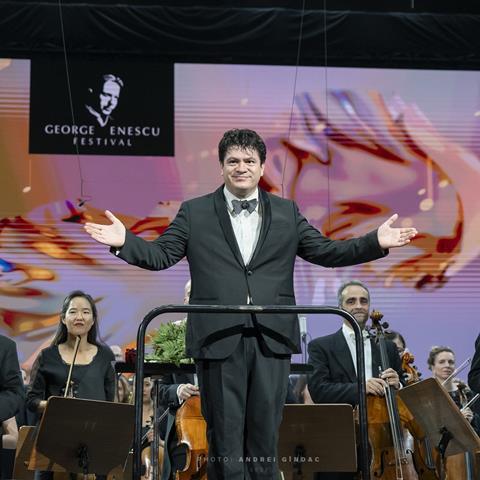
Winning a major competition can bring sudden attention, but not always a lasting career. What support do young players need afterwards?
Cristian Măcelaru: As members of the Enescu Competition laureates family, we support them by offering not just concerts, but mentorship. At any point, previous winners who have questions have the opportunity to reach out to me and receive ideas or guidance – or at least have a conversation with me personally, or with the team that runs the Enescu Festival.
We are very, very proud of all the work that our previous winners have done and continue to do, and we are extremely supportive of their growth and career paths. It is important that the competition carries forward the concept that Enescu himself prized, in which mentorship is one of the most important things an artist or an artistic organisation can provide for young musicians.
The competition now includes masterclasses, professional development, and well-being sessions. Are competitions beginning to think more broadly about what they should offer young musicians?
Cristian Măcelaru: That is exactly the point. For me, at least, the Enescu Competition is a place where we all get to deepen our knowledge and appreciation of the art form, and to learn from each other in ways that provide a path forward for young artists to create and maintain a career that is really meaningful.
I think it’s important for us not to focus just on the idea of winning a prize, but rather on the journey towards that prize, and then the journey beyond it. That’s why we make an incredible effort to provide tools for all the competitors to understand how they can contribute to the society they are part of, how they can contribute on the global stage, and what benefits they can bring to our beautiful art form, while at the same time maintaining a beautiful, healthy lifestyle that allows them to make their art at the highest level.
I hope our competition shows this path forward, and that it becomes a model for what can be achieved when we put all focus on the journey itself rather than simply on the goal of winning the competition.
Read: Cello and violin contestants announced for 2026 George Enescu International Competition
Read: George Enescu International Competition 2026 – 20th Edition
Read: Postcard from Bucharest: George Enescu International Competition
Discover more Featured Stories like this in The Strad Playing Hub











No comments yet