
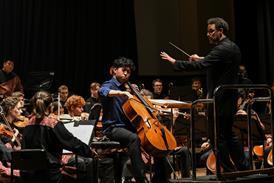

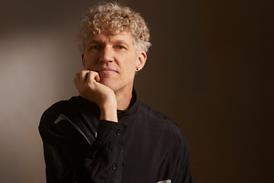
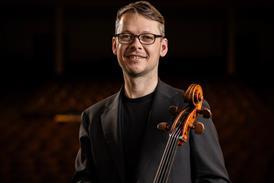


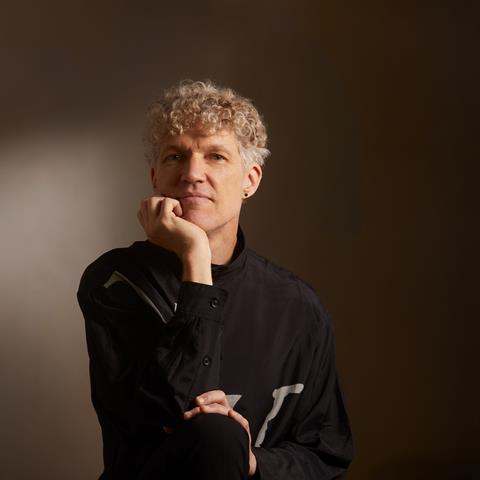
Ahead of the first concert of Sinfonia Smith Square’s Sanctuary series, cellist and curator Matthew Barley ponders on the environmental and communal factors that pave the way for the healing power of music, creating a shared, mystical experience for performers and audiences
Discover more Featured Stories like this in The Strad Playing Hub
It’s a challenge to write about a new kind of concert before it has happened, because I don’t yet know what it will feel like – what is the atmosphere? What will be the effect on the audience? How will we performers feel?
At the moment it just all exists in my head, so how did this idea start?
’The power of music to integrate and cure…is quite fundamental. It is the profoundest non-chemical medication’ – Oliver Sacks
I’ve been on a quest for many years to unearth more of the healing power of music. It can happen in all sorts of concerts in all sorts of settings, and can be hard to pinpoint why - but are there ways to make it more likely to happen? Trying to answer this question has provided inspiration for the new Sanctuary Series at Smith Square.
The root of the word to heal comes from Proto-Germanic, meaning to make whole, and what I am after here is exactly that feeling of being more whole that can come from a deep and powerful musical experience. And there is a mystical aspect to this experience - mystical as in something that transcends human understanding, the experience that leaves you a little lost for words and yet knowing that something big has occurred.
So, asking myself are there ways to create the conditions for a more direct and transcendent experience with the sounds the musicians are making, I looked at a range of parameters and ingredients: how the audience enter the hall, what music is played and in what order, applause, silences, candles and incense, and using several different combinations of performers, including two of the Royal Ballet’s best improvising dancers.
When I say mystical, it is because even having been soaked in music pretty much daily for over half a century, I still don’t really know how it works. That vibrations in the air colliding with our almost inconceivably sensitive ear drums (they can detect movement of a billionth of a metre) can be understood as music is already miraculous. That this phenomenon can unite groups of people to share grief, or wild joy, spiritual ecstasy, humour, or simple, gentle peace is simply off the charts. How glorious that something so ubiquitous can be so clear to the heart, and so opaque to the mind.
’Just as breath is shared, so the autonomic systems communicate with each other without our conscious knowledge. When the singer holds his breath, so does the audience, and when that breath goes free, so does the audience.’ – Howard Milner
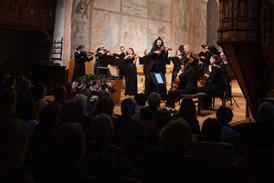
I’m delighted that we have The Purcell Singers for our first concert, bringing the magic of the voice to the evening. And what is it about live performance that is so different from recorded?
Mirror neurons are cells in the brain that fire up both when you do something physical, and when you perceive another doing that thing. So the same cells fire up when you wave your hand as when you watch someone waving. There are all sorts of connections between music and mirror neurons and the many ways they help us to understand and process emotion. These connections are heightened when we are watching the musicians as well – when we see these arms and fingers moving, these bodies swaying, these heads bobbing, there are all manner of reactions going on in our brains as we perceive these movements, and this is all part of the greatness of live music. It also helps, again, to reduce that feeling of performers and audience being different, which is something I really wanted to address in these concerts.
As a performer, ideally, I want to feel that I am going on a journey with the audience in very much the same way. We are in this together. I find standing and bowing to hundreds of people clapping doesn’t help that – it accentuates the difference. I think that sitting in silence between the pieces means that as the music ends, everyone in the room is engaged in a contemplation of the silence – and there are an infinite number of kinds of silence. The character of these sonic spaces is dictated partly by what sounds have occurred before them – how they are set up – and also by how everyone in the room is feeling during that time. The fabric of silence is a co-creation. A good, deep, relaxed, shared silence is another kind of healing.
As well as the choir, I’m also delighted to be welcoming Mishka Rushdie Momen on the piano. Mishka is a fabulous young pianist I’m excited to be playing with – and as well as joining me for Brahms Cello Sonata no.1 in E minor, Pärt Spiegel im Spiegel and Rachmaninov Vocalise, she will play a solo set, and also be playing Pärt and Byrd on the organ as the audience arrive in the hall, setting the tone for the evening.
And the last performance element is our dancers.
In some ways dance and music are hardly even different things, even though they are so often categorised as different art forms! In many African languages including Bantu, the word Ngoma means drum, music and dance – these concepts are so tightly bound together. So I’m absolutely delighted to be welcoming Nadia Mullova-Barley and Liam Boswell, soloists of the Royal Ballet, who will be interpreting some of our music through their own improvised movements. I think it will add a sprinkle of magic to the evening.
I’d like to add my thanks here to the wonderful team at Smith Square who have supported the idea with such enthusiasm and professionalism. A musician is lucky to have such partners to bring ideas to life, and I can’t wait for the next concerts in the series in January and June 2027 with so many more exciting performers!
Sanctuary: A Turning Leaf will take place at Smith Square Hall at 7:30pm on 17 October 2026, with further concerts in the series in 2027.
Read: ‘Why not?’: how saying yes shaped my musical career
Discover more Featured Stories like this in The Strad Playing Hub







No comments yet