








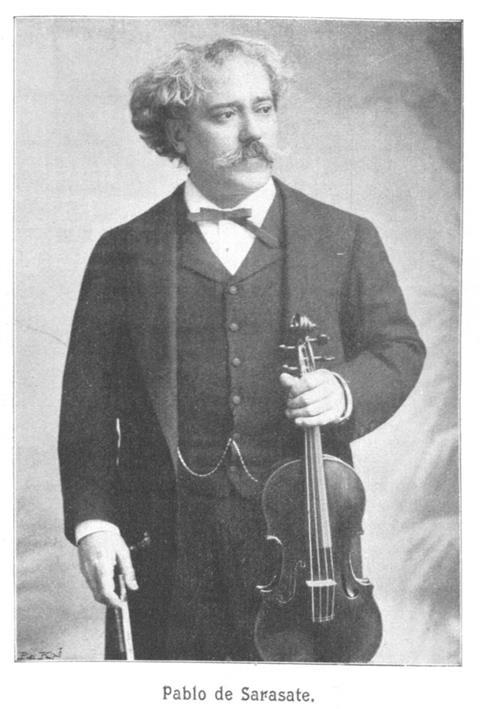
The legendary violinist died on 20 September 1908. Dr. Nicole Crespo O’Donoghue examines Sarasate’s performing life, including the wide range of repertoire he presented to audiences throughout his career
Read more Featured Stories like this in The Strad Playing Hub
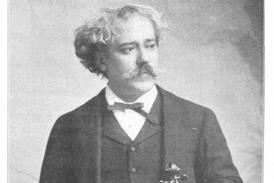
Pablo de Sarasate (1844-1908) is regarded as one of the great virtuoso players of his time, as well as the composer of violin works such as Zigeunerweisen op. 20. However, the range of repertoire Sarasate performed is much larger than is generally recognised, and his impact far wider.
In the mid-19th century, there was a shift in musical culture due to wars and developments such as copyright law and concert halls. Virtuosi started to become unfashionable and a new kind of violinist emerged. Sarasate embraced this shift. Instead of basing his repertoire mostly on his own compositions, he began to combine his own works with those of others. He had a clear commitment to the performance and dissemination of new works, helping to establish a wide range of violin repertoire, works that have become staples of today’s violin repertoire.
Young Sarasate
While Sarasate is often envisioned as a mature man with an established career, his role in the development of violin repertoire began as a young violinist, upon graduating from the Paris Conservatoire. As early as 1867, Sarasate began to introduce complete violin concertos and sonata movements in his programmes. He premiered Saint-Saëns’ Violin Concerto in A major no. 1 op. 20 on 4 April 1867, and the same month performed Mendelssohn’s Violin Concerto in E minor op. 64. He also began to perform movements from Beethoven’s ‘Kreutzer’ Violin Sonata no. 9 op. 47. These performances helped him establish a strong reputation early on, with critics describing Sarasate as having ‘singular virtuosity’ and a ‘diabolical bow’.
A defining moment in Sarasate’s career was his first tour to North and South America in 1870, where he observed: ‘I am beginning to obtain a reputation as a serious violinist’. It was during this tour that Sarasate gave the first American performance of Bruch’s Violin Concerto in G minor no.1 op. 26 at the Steinway Hall in New York. He also added new works to his repertoire such as Beethoven’s Violin Concerto in D Major op. 61.
Sarasate’s own compositions started to veer away from opera fantasies, as he started to compose or transcribe according to the specific locations he was in. In 1874, Sarasate composed his first Hispanic inspired work, Airs Espagnols. Coincidentally, the same year that Georges Bizet was working on Carmen, and prior to Lalo’s Symphonie Espagnole op. 21.
Back in Paris, the violinist enjoyed great acclaim performing at Saint-Saëns’s Concerts Populaires and premiering works such as Lalo’s Violin Concerto op. 20, which he consecutively performed in other locations such as Holland. He also performed the work for his solo debut at London’s Crystal Palace in 1874 and was named ‘the violinist in fashion of the moment’. The following year, Sarasate premiered Lalo’s Symphonie Espagnole, a work which according to letters, he helped create in 1875.
Pivotal engagements in Europe
In 1876, Sarasate gave the first performance of Raff’s Suite for Violin and Orchestra op. 180 in Paris, and composed his transcription of Chopin’s Nocturne op. 9 no. 2. These additions coincide with his debut in Monaco and Germany that year. While the initial response to Sarasate’s programming choices was apprehensive, he was offered to replace violinist Hellmesberger at the Musikvereins-Saal in Vienna with three days-notice. According to Juan Manén, the performance was a ‘sensation’, and Sarasate was subsequently invited to tour Germany and the Austro-Hungarian Empire until December 1877. He often chose to perform unknown French compositions and avoided programming works such as Beethoven’s Violin Concerto, as in his own words – ‘they would criticise me too much’.
During this time, Sarasate met several international artists, including Franz Liszt, Clara Schumann, Hans von Bülow and Joseph Joachim, all of whom influenced Sarasate to compose or dedicated compositions to him. An example of a fruitful, new working relationship was the one with Max Bruch. In October 1877, Bruch and Sarasate travelled together to London to perform the first violin concerto, which was Bruch’s concert debut at the Crystal Palace. A month later, they premiered Bruch’s Violin Concerto no. 2 op. 44, which had been composed for and dedicated to Sarasate, from manuscript parts. Sarasate was then part of a team of violinist advisers who helped edit the work before publication.
Throughout his career further dedications were made, including by Henryk Wieniawski, Antonín Dvořák and Leopold Auer. The Scottish composer Alexander Mackenzie dedicated his Violin Concerto op. 32 to Sarasate, which he premiered in 1885, with Mackenzie as conductor. During the 1880s, Sarasate also toured the United Kingdon and Ireland, performing for Queen Victoria in several occasions, who noted in her journal: ‘I never heard finer execution or more feeling than Sarasate has’.
Late transformative period – performing Bach and Mozart
While we can imagine Sarasate premiering notable violin concertos, the most surprising addition in Sarasate’s repertoire in the latter stage of his life are examples of historicist repertoire. This repertoire expansion coincided with a major shift in composition at the turn of the century (i.e. Mahler and Debussy). 1889 was also the year when Paris held the Exposition Universelle, a great event where cultures from all over the world interacted and new inventions were displayed. During a time of rapid change, violinists such as Sarasate and August Wilhelmj, became the last of their kind and had to adapt accordingly. It was during this time that Sarasate included in his repertoire Mozart’s Violin Concerto in A major no. 5 K.219, which he regarded as ‘the most charming of the three of the immortal composer’.
Sarasate also began to perform Mozart’s Sonatas, Bach’s Prelude from the Partita for Solo Violin in E major no. 3 BWV 1006 and the Chaconne from the Partita in D minor no. 2 BWV 1004. However, as it is evident in Sarasate’s 1904 recordings, where he performs Bach’s Prelude in E major, he still played these compositions within the virtuosic, fast style for which he was known. Sarasate added these pieces to his repertoire in order to embrace changes in musical taste but stood firm in performing them in his own style.
While Sarasate performed a great variety of works throughout his career, there are particular compositions that reappeared often. The concertos by Mendelssohn and Bruch as well as works by Lalo and Saint-Saëns, became Sarasate’s most performed violin concertos worldwide. As Auer stated, ‘to Sarasate belongs the distinction of having been the first to popularise the concertos of Bruch, Lalo and Saint-Saëns’. Beethoven’s violin concerto also became a regular feature in Sarasate’s programmes, with a cadenza by Saint-Saëns, which according to critics was of immense difficulty but Sarasate performed it ‘with marvellous ease’.
Particularly, Sarasate’s performances of Mendelssohn and Beethoven’s violin concertos gained him great respect, and were particularly well-received in cities such as London, where he was described as possessing ‘a silvery sweetness of tone peculiar to himself’. His success further confirmed by the numberless recalls expressed in reviews.
Sarasate was unique in that he maintained the virtuoso tradition whilst also establishing new repertoire. The violinist will continue to be famed by his virtuosity and charisma, evident in his compositions such as Zapateado and Zigeunerweisen, which became an intricate part of his individuality. However, it is important to also acknowledge his wider impact. Sarasate inspired new compositions, on some occasions helped composers to edit and develop works, and then disseminated them worldwide. Archival research shows that the generations that followed, looked up to him and used him as an example. Sarasate had a direct impact on the development of performance traditions and the works that we now perform today.
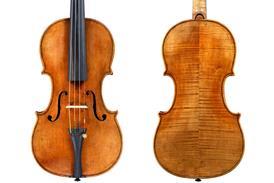
Dr. Nicole Crespo O’Donoghue is a violinist and researcher. Her PhD thesis Pablo Sarasate across Theory and Practice: Synthesising Old and New Sources will be available in 2027. Among hidden concert programmes, Nicole discovered a composition by Emile Bernard often performed by Sarasate. Nicole, alongside Mark Kinkaid on piano, performed it live with Sarasate’s Vuillaume violin in Pamplona, Spain:
Read: An interview with Sarasate - From the archive: May 1893
Read: Analysing the ‘Boissier, Sarasate’: Stradivari à la mode
Read more Featured Stories like this in The Strad Playing Hub



![Ayanna Witter-Johnson [Jordan Woods] 7](https://dnan0fzjxntrj.cloudfront.net/Pictures/100x67/4/9/4/44494_ayannawitterjohnsonjordanwoods7_224583.jpg)







No comments yet