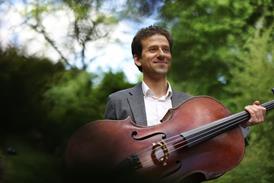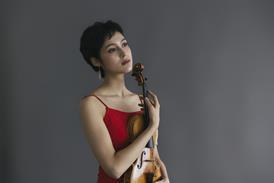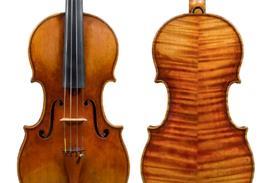
The members of the Tetzlaff Quartet, who recently released their first Beethoven disc, talk to Tom Stewart about what’s really behind the composer’s late quartets, about why they’ve taken a quarter of a century to record any Beethoven – and the challenge of keeping up appearances
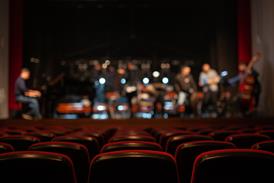
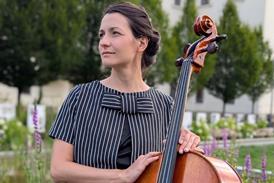
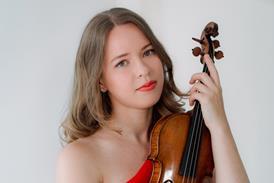
I arrive to meet the Tetzlaff Quartet at a 1950s radio building on the outskirts of Bremen, where the players are rehearsing the playful final measures of the third movement of Beethoven’s op.130 String Quartet in B flat major. The Sendesaal’s studio was the first in Germany to be suspended entirely within another structure, and in its crisp and mellow acoustic, the quartet’s feet never seem to touch the ground either. Quick staccato scales, fidgety motifs and snatches of singing melody overlap in a texture that takes flight into the upper reaches of the hall and hovers above us as the players repeat the same giddy phrases over and over again. The warm and affable group – violinists Christian Tetzlaff and Elisabeth Kufferath, violist Hanna Weinmeister and cellist Tanja Tetzlaff – is two days into a four-day recording session for its new disc, which comprises Beethoven’s op.130 quartet featuring its original finale, the ‘Grosse Fuge’ op.133, plus op.132 in A minor. They are among Beethoven’s biggest chamber works, each containing an entire galaxy of expression as well as some of the most ambitious music he ever wrote. Recording all three in one go is a massive undertaking.

Clearly, 2020 is a bumper year for Beethoven fans. The Tetzlaff Quartet joins a raft of other musicians marking 250 years since the composer’s birth, with celebrations taking place all over the world to commemorate it. Beethoven fever is nothing new, however. Even while the composer was still alive, the critic E.T.A. Hoffmann wrote that his music ‘unveils before us the realm of the mighty and immeasurable’; and 175 years ago, a group of admirers that included Liszt, Schumann and Berlioz was busy raising money and writing music for a commemoration in Beethoven’s native Bonn of what would have been his 75th birthday. Not that a visitor to the temporary concert hall thrown up in just two weeks to mark the occasion would have been able to catch a performance of one of the late quartets. Although in the 20th century Stravinsky described op.131 in C sharp minor as ‘perfect, inevitable, inalterable’, Beethoven’s contemporary Louis Spohr reflected the mood of 1820s Vienna when he balked at the ‘indecipherable, uncorrected horrors’ of the late quartets as a whole.
Whatever you make of the cult of genius that has always surrounded the composer, you’d be hard pressed to think of a series of works that embody its aura more than the late string quartets. But according to first violinist Christian Tetzlaff, the air of intellectual other-worldliness that surrounds the late quartets doesn’t tell the whole story. ‘In some ways, I think they sound even more naive than the earlier ones,’ he says. ‘There are moments in the harmony and melody that are jaw-droppingly simple.’ Nodding in agreement, Kufferath explains that the way Beethoven weaves these glimpses of folkishness and flashes of naivety into the fabric of the music makes it more – not less – powerful: ‘The “childlike” moments are placed so artfully that they always land at exactly the right time. Putting the march after the “Heiliger Dankgesang” in op.132, for example, means that it comes as a relief to the listener. It puts the other music into context.’

Perhaps the transcendental qualities often associated with the music of Beethoven’s late period are plainest at points like this, then – when the depth and complexity of their surroundings are drawn into sharper focus. ‘These points go beyond the emotional turmoil of human beings, though,’ says Tanja Tetzlaff. ‘When Beethoven gives us something like this to play, these “childlike” moments, he’s reaching for a simplicity that goes a little further than what we’re able to imagine ourselves.’ She gives the example of the ‘Alla danza tedesca’ in op.132, which contrasts with the following Cavatina, and makes the point that these flickers of musical innocence sometimes undermine themselves in ways that destabilise the sense of comfort they lend in performance. ‘The little hairpins every second bar almost make me feel a little seasick. They don’t sit naturally, and one shouldn’t try to play them in a way that sounds as if they do. You have to obey the score.’ Christian suggests that Beethoven’s markings might simply reflect contemporary performance practice, but Kufferath isn’t so sure. ‘Do you think?’ she asks. ‘The difference between getting a little louder and then a little quieter and just getting a little louder is so fussy – I think he’s definitely trying to tell us something.’

But what? Are the clues there in the score? ‘In these pieces, the truth is that you don’t always know why certain things are written the way they are,’ says Kufferath. ‘In that sense, they remind me of Bartók. When we played the Fourth Bartók Quartet, for example, we felt quite far from his harmonic language. On an analytical level it was difficult to understand why everything worked, but it was clear from an emotional perspective that it just did.’ Christian puts it differently: ‘It isn’t easy to see where the incredible aggression in the first movement of that Bartók quartet is coming from, or what the story behind it is. The “tedesca” is another strange movement, especially towards the end. We all start at different points in the same material and come together only in the final bars. Haydn sometimes does things like that, but here it’s taken to the extreme. It’s like Haydn on drugs.’
Christian Tetzlaff’s latest recording (his third) of Beethoven’s Violin Concerto was released last year to widespread acclaim, while his sister Tanja, like Kufferath, performs widely as a soloist and chamber musician, and Weinmeister, accomplished on both the violin and the viola, is a concertmaster of the Zurich Philharmonia. Since the group was established in 1994, the players have combined their work as a quartet with busy individual careers, coming together only a couple of times a year to work in short bursts on a series of performances, sometimes with a recording attached. ‘The problem is always the lack of time,’ Kufferath says, ‘but I think anyone else would tell you the same thing.’ Maybe there is something to be said, though, for working in such a concentrated way. ‘A full-time quartet rehearses for weeks and weeks before they play the piece for the first time. We can’t do that, which keeps us very alive and very fresh,’ says Tanja. ‘On the other hand, spending so much time doing other things means we have to work hard to make sure our four voices are equal and balanced when they come together. This is especially tricky when we all have intricacies in our parts that we want to bring out.’

Although the quartet have been playing together for more than a quarter of a century, they made their first recording – Schoenberg’s String Quartet no.1 and Sibelius’s Voces intimae – ten years ago. Since then, they have won a 2015 Diapason d’Or award for a disc of Mendelssohn and Berg and followed it with a 2017 pairing of an early Haydn quartet with Schubert’s String Quartet no.15. ‘I think it was wise to leave some time after our initiation with pieces “on the outside”, as it were, because there’s more of a sense of mission,’ says Christian. Might waiting to record Beethoven also have something to do with the age of the players? Tanja answers, ‘If one is 20 or something, you want to go in with a big romantic sound, or at least I know I did! In terms of repertoire we’ve recorded, we started with the Second Viennese School and worked backwards, but I think we’re all a little wiser nowadays. We’re ready to go to the core of the repertoire and record some Beethoven, which has actually turned out to be a lot more complicated than Schoenberg, I think!’

Like Schoenberg a century later, Beethoven saw beyond the horizon of the quartet and recast it in his own image, and both composers reorganised the relationships between the instruments and the sounds they make. ‘It’s the equality of the voices in these Beethoven quartets that has brought us further as a group,’ says Weinmeister. ‘If we are playing Dvořák, for example, we probably all have a solo here or there and it’s fine for us to play as four individuals. If one of us suddenly makes a sound that’s too personal in the Beethoven, though, it really sticks out. Finding a common language has been a real learning experience.’ Kufferath agrees: ‘We each have to play and listen in three directions. I’m totally happy performing these quartets without an audience, in a way, because the four of us make the experience complete. It isn’t that we’ve been shying away from the biggest pieces, but now feels like the right time, and I can’t imagine anything more challenging or gratifying.’
Despite the music’s reputation for profundity, it’s clear the Tetzlaff players see its supposed cerebral challenges as a barrier to neither their own nor their audience’s enjoyment. According to Christian, not even the encyclopedic ‘Grosse Fuge’ – the original finale to op.130 that Beethoven’s publisher persuaded him to replace, and which is supposed to have inspired Schoenberg’s own experiments in atonality – is the insurmountable cliff face people think it is. ‘Because of its name and its history, people think, “Oh my God!” But really it doesn’t have to be an exercise in brain power. It shouldn’t be, in fact. The character is the same kind of wild joy that you hear in the Ninth Symphony – it’s a bit over the top and it’s going to hit the audience hard.’ OK, so perhaps Beethoven’s later music isn’t as mind-bogglingly obtuse as some of the mythologising would have us believe – but the ‘Grosse Fuge’ is hardly a Haydn minuet. Here and elsewhere, is it the quartet’s responsibility to act as the audience’s guide? ‘You have to be clear about things like where the theme is, for example,’ says Tanja, ‘and that this or that passage is coming off the beat, but I’d never want to play so plainly that one could point out the features of the music as we play it. It’s a performance, not a lecture.’ Christian agrees: ‘It’s about finding easy ways to make sense of things for the audience. If the texture is really complex, like in certain parts of the fugue, it’s our job to make sure we each play the theme with great clarity, but only so that the listeners’ attention is drawn to the simplicity of the motif. Making too much of the fact we’re all doing something completely different only makes it harder for them.’

‘I still find it very complicated, to be honest,’ Weinmeister says. ‘It isn’t really a case of just “playing with joy”!’ Laughing, the rest of the group concede that she’s right. ‘But having said that,’ she continues, ‘people often forget that there’s lots of humour in this music, too. The quartets aren’t at all dry, sometimes they’re almost jazzy, and I think there are definitely sections where Beethoven is poking fun at himself.’ Miming some virtuosic passagework, Christian suggests that the composer ‘certainly sometimes makes fun of the second violin, especially when the first has nothing to do for two minutes’, and even the ‘simplest’ passages demand total concentration. ‘It’s like what we were playing when you came in. It sounds easy, or it should sound easy, but it’s in five flats and there are those stupid runs to get your fingers around. If it shows, though, that we’re working really hard, then we’re definitely on the wrong track. Do you want the audience to know how difficult you’re finding it? Of course you don’t!’
-
This article was published in the June 2020 Tetzlaff Quartet issue
The Tetzlaff Quartet members discuss balancing chamber playing with busy individual careers - and recording their first Beethoven album after 25 years together. Explore all the articles in this issue.
More from this issue…
- The Tetzlaff Quartet on recording Beethoven
- A genuine Amati or a clever fake?
- Top soloists discuss working with conductors
- New translations of Sarasate’s letters
- Bows from the courts of Napoleons I and III
Read more playing content here
-


No comments yet