




Early recordings of Elgar’s Violin Concerto opened up a new world of expressive possibilities for the British violist – despite her never having played it
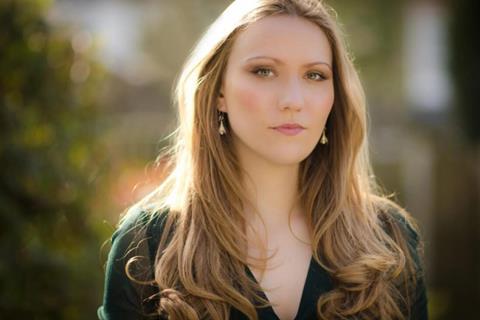
Discover more Featured Stories like this in The Strad Playing Hub.
Read more premium content for subscribers here
Elgar’s Violin Concerto has been with me since I was young. It’s a very affecting, moving piece that fundamentally shaped the way that I think about music. That said, I’ve never actually performed it or even practised it! I played both the violin and viola until I was 18, when I switched to viola almost exclusively, before I had the opportunity to tackle the concerto, which is one of the hardest in the repertoire.
There’s a special beauty and spoken quality to the concerto, as well as a peculiar Englishness. When I was growing up, there was always a lot of English music playing in the house, particularly songs, and I think the concerto fits into that tradition. My first exposure to the work was from the 1929 recording by Albert Sammons, with Henry Wood conducting. Sammons was almost entirely self-taught and it’s very heart-on-sleeve playing, with lots of portamentos and rubato throughout. Then I discovered the Yehudi Menuhin recording from three years later, conducted by the composer. Menuhin’s performance is incredible; a free, flexible interpretation that’s almost impossible to imagine for yourself. Thirdly, I found Marie Hall’s recording of an abridged version, again with Elgar conducting. There are pronounced differences in her interpretation again, especially in terms of expressivity. Hall’s vibrato, for instance, is very narrow and she only uses it sparingly on specific notes, whereas Menuhin’s is larger and runs throughout the piece.
For me, all of these early recordings embodied a different manner of interpretation, which I think has rather been lost in today’s playing. It feels like a much more direct, expressive way into the music than we’re used to nowadays. In modern recordings I think players can become too focused on the details and precision, at the expense of expression. I often find myself telling my students not to be stifled by notation and remember there are other layers to what we’re doing. I also think that appreciating this old-style approach opens up a whole other mode of expression and way of communicating with people, which surely is what music is all about.
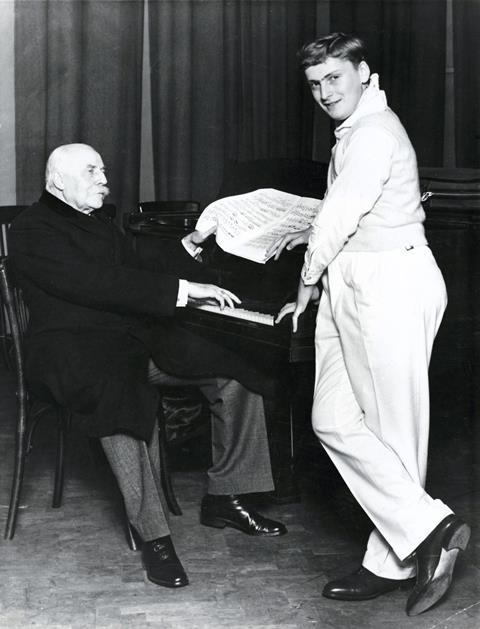
There’s an inspirational film from 1965 (bit.ly/4kmm2ZS) of Menuhin giving a masterclass on the Violin Concerto to a young player – Desmond Bradley, who went on to become a leading soloist. In it, Menuhin talks about the character of the piece and how the second subject embodies this spoken quality: you hold one note a little longer as a kind of reflection, then wait before launching into the next few notes. It’s a way of communicating in a speech-like way, which I found so appealing when I listened to it. It also gives an impression of intimacy, of hearing something very personal to the player.
I now try to play more in that kind of style, and to understand the narrative of the particular work I’m performing. Obviously it’s hard to recreate some of the things I find so appealing about that way of playing, just because it’s so different from today: the number of portamentos they used, for instance. But it’s a different way of connecting with audiences, and one I try to explore further in my everyday practice.
If I were teaching a student, I’d recommend that they listen to Elgar conducting his Serenade for Strings (bit.ly/4nPWszJ) just to get used to that style. And also to follow along with the score, because they’ll notice that he conducts with amazing flexibility, rather than simply following the notes. There’s just so much more to be found in terms of the expressive potential of the music, and early recordings can be a really good way into it. This realisation is certainly what’s helped me the most in my own playing.
INTERVIEW BY CHRISTIAN LLOYD








No comments yet