


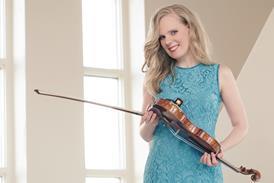





Despite its short length, Hindemith’s Trauermusik was an eye-opening concerto for the US violist, revealing all the possibilities of the instrument’s sound world
Discover more Featured Stories like this in The Strad Playing Hub.
Read more premium content for subscribers here
Hindemith’s Trauermusik is an important piece for me in many ways. It was the first piece I played as a soloist with orchestra; it brings back memories of a very special teacher; and it was one of the first pieces I played when I made the transition from violin to viola aged 13. At the time I never felt like the violin was the right instrument for me, but taking on the viola just clicked: it was the right instrument for my personality. Its role in an ensemble is to make things richer and give them more depth, which to me felt like a very sophisticated, fun thing. And Trauermusik was a perfect piece for me at that stage: it really gets into the meat of the instrument and gives you an opportunity to find the core of your sound.
It’s not a very complex piece but it’s very emotionally honest and earnest, which I connected with very quickly. There are a couple of over-the-top moments of emotional outpouring, but it’s mostly quite reserved. So it gave me the space and time to pull the sound out in the way that I needed.
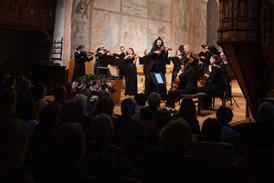
I was studying at the Baltimore School for the Arts where, first thing in the morning, all the music students would sing together in chorus. We had an incredible choral instructor named Charles Richardson, who gave us works like Brahms’s German Requiem and Stravinsky’s Symphony of Psalms. Then, when I was 16 years old, Mr Richardson died suddenly at the age of 32, which was a shocking moment for me. So the next season, we put together a concert in his memory in which I performed Trauermusik with the orchestra behind me.
Of course, being a violist I was a huge Hindemith fan, and at the time I was auditioning for colleges playing his concerto Der Schwanendreher, so it somehow felt like coming full circle. It also felt like a proper tribute to our teacher, who had meant so much to me and inspired so many students by giving us these incredibly ambitious pieces to perform.
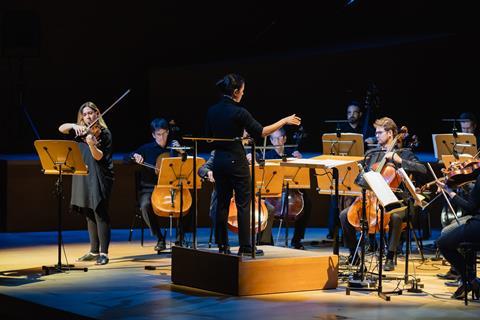
Trauermusik consists of four short movements that go by very quickly. The first three are related to one another while the last is a reimagining of the hymn tune Old Hundredth, which we called the ‘Doxology’ when I was growing up. So Hindemith interpolated his own beautiful melodies into this traditional hymn.
The story goes that he was in London in 1936 to give the British premiere of Der Schwanendreher, but King George V died the night before and the performance was cancelled. So he wrote this piece in around half a day, and premiered it with the BBC Symphony Orchestra just two days after the king’s passing. With Hindemith, there are many pieces that are very intricate and well worked out. Trauermusik is just the opposite: you get the feeling that he’s creating this beautiful, perfect little thing through pure instinct.
There are moments in the piece where, for obvious reasons, it can feel a bit lugubrious. So you need to take advantage of the moments where it gains some real forward motion, so that all the more contemplative moments can have their own space. It’s a matter of using the speed of the bow to add to the momentum of the piece. It’s also wonderful to perform it with a string orchestra rather than just piano.
I can still remember those first rehearsals with my fellow students, having ideas about time, negotiating the dynamics and discovering the ability to lead in a way that didn’t feel overbearing. It was all part and parcel of discovering the piece, and who I wanted to be as a violist.
INTERVIEW BY CHRISTIAN LLOYD
Read: Masterclass: violist Tabea Zimmermann on Hindemith Sonata for solo viola op.25 no.1
Read: Sentimental Work: Fabio Biondi on Berlioz’s Roméo et Juliette
Discover more Featured Stories like this in The Strad Playing Hub.
The number one source for playing and teaching books, guides, CDs, calendars and back issues of the magazine.
In The Best of Technique you’ll discover the top playing tips of the world’s leading string players and teachers. It’s packed full of exercises for students, plus examples from the standard repertoire to show you how to integrate the technique into your playing.
In the second volume of The Strad’s Masterclass series, soloists including James Ehnes, Jennifer Koh, Philippe Graffin, Daniel Hope and Arabella Steinbacher give their thoughts on some of the greatest works in the string repertoire. Each has annotated the sheet music with their own bowings, fingerings and comments.
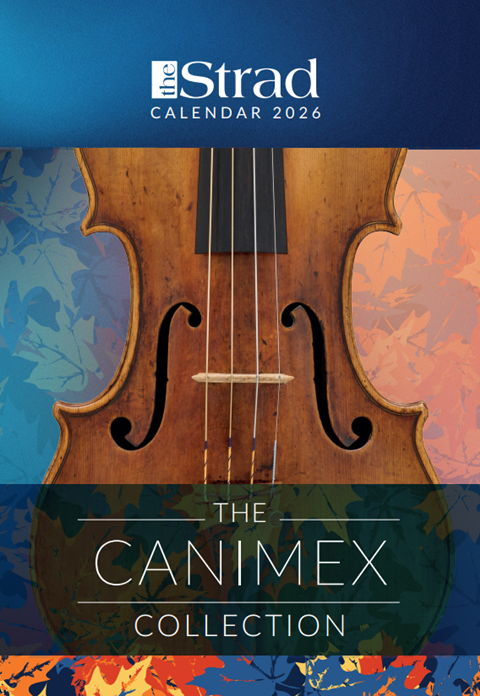
The Canada Council of the Arts’ Musical Instrument Bank is 40 years old in 2025. This year’s calendar celebrates some its treasures, including four instruments by Antonio Stradivari and priceless works by Montagnana, Gagliano, Pressenda and David Tecchler.










No comments yet