





A week of high-stakes performances and exacting repertoire marked this year’s Queen Elisabeth Competition cello final, as Davina Shum discovered
Discover more Featured Stories like this in The Strad Playing Hub.
Read more premium content for subscribers here
It’s hard to believe that 2026 was only the third for cello of the Queen Elisabeth Competition, despite the event’s 75 years of existence. Introduced in 2017, the cello edition has quickly established itself among the world’s leading contests, with a growing roster of internationally recognised laureates.
Running from 4 May to 10 June at Brussels’s main concert venues Flagey and the Centre for Fine Arts (aka Bozar), the event drew international attention, with the early rounds live-streamed to a wide online audience. By the time I arrived in Brussels for finals week (25–30 May), my social media feed had already made many contestants feel familiar.
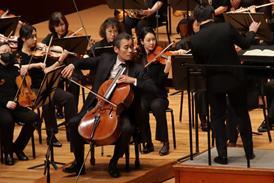
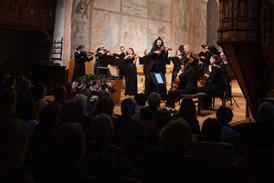
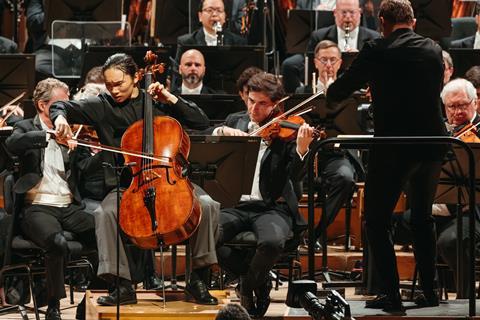
The final round brought together twelve cellists who had already navigated demanding repertoire in the earlier stages. Each evening, two finalists performed Fang Man’s newly commissioned cello concerto Four Odes to the Tidings of Flowers – which they had prepared in isolation over seven days at the Queen Elisabeth Music Chapel – followed by a concerto of their choice, played with the Belgian National Orchestra under Antony Hermus.
Most finalists leaned heavily into 20th-century repertoire, particularly Shostakovich and Prokofiev, and there was only one Dvořák Concerto. Perhaps this year’s contestants had been influenced by 2022’s first prize winner Hayoung Choi’s bold choice to programme the Lutosławski Concerto for her winning performance.
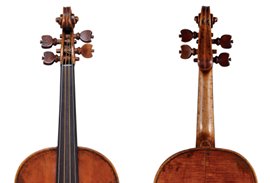
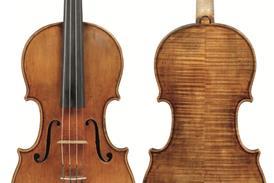
Fittingly for a competition marking its 75th anniversary, the top prize included a four-year loan of Pablo Casals’s 1733 Matteo Gofriller cello, which was displayed in the foyer throughout the week. The instrument loan commemorated the 150th anniversary of the birth of both Casals and Queen Elisabeth of Belgium, who enjoyed a close friendship.
Russian Maria Zaitseva, 24, opened proceedings with an athletic and committed account of the commissioned work, the dense textures of which nevertheless presented challenges that would recur in other contestants’ performances throughout the week. The composer notes that the four movements of the work can be performed in any order, allowing performers to reflect their personality and shape their own narrative. Zaitseva’s subsequent performance of Henri Dutilleux’s Tout un monde lointain was finely shaped, with attentive interplay across the orchestra, though the work itself struggled to leave a lasting impression on me.
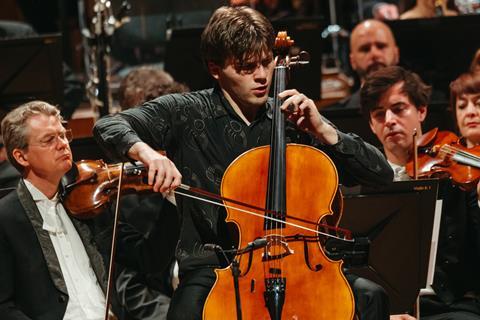
By contrast, 23-year-old German Lionel Martin approached the opening harmonics of ‘In Spring Valleys, An Ode to Orchid’ from Fang’s Four Odes with a fluid, unencumbered ease, and navigated its extended techniques with confidence. His energetic account of this work earned a warm reception (including his choice to incorporate a unison scream with the orchestra at the end of his final movement, a moment that enjoyed some virality on social media), though his later performance of the Dvořák Concerto showed signs of fatigue as it progressed. Despite this, it was perhaps the familiarity of the repertoire that prompted the audience to leap to its collective feet at the concerto’s conclusion.
I was impressed by the poise and sensitivity of Japan’s Yo Kitamura’s, 22. He sustained a compelling a compelling narrative through Prokofiev’s Sinfonia concertante with fun and buoyancy. Italian Ettore Pagano, 23, brought precision and clarity to the same work, dispatching its blistering high-register passagework with apparent ease. Elsewhere among the Prokofiev performers, 24-year-old French cellist Clara Dietlin offered a more introspective interpretation, in contrast to Pagano’s extrovert energy.
Kicking off proceedings for the four performances of Shostakovich’s First Concerto, 29-year-old Russian Ivan Sendetsky gave a solid account of the work, following a tentative start to the required piece. Two days later Spanish cellist Álvaro Lozano Cames, just 20 years old, delivered a passionate and committed performance of the same concerto, earning one of the week’s most enthusiastic audience responses, and as a result, the audience-voted RTBF Musiq3 Prize, worth €2,500.
Uzbek Dilshod Narzillaev, 28, brought flexibility and rhythmic vitality to Four Odes to the Tidings of Flowers, and he shaped his Shostakovich with a sense of long-term architecture, particularly in the final two movements. Polish Krzysztof Michalski, 23, also opted for Shostakovich, exercising his creativity through an inventive cadenza.
Among the most distinctive personalities was 28-year-old American Leland Ko, a Princeton German literature graduate whose theatrical stage presence and narrative clarity lent both the commissioned work and the Barber Concerto a strong sense of character. His ability to communicate with both orchestra and audience marked him out as a natural performer. Canadian Andrew Ilhoon Byun, 28, approached the required piece with expansive phrasing and a spacious cadenza, though at times the momentum seemed to falter. His performance of the Dutilleux showed both imagination and stamina.
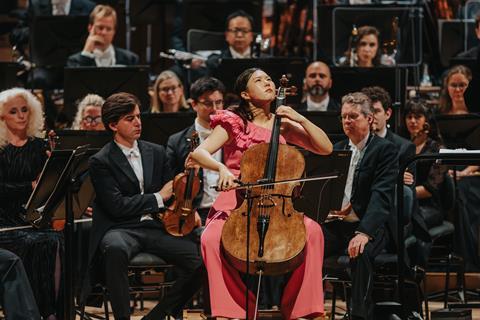
The final performance came from 20-year-old Korean Tae-Yeon Kim, who delivered an energetic and compelling account of Lutosławski’s Concerto. Her playing combined focus and urgency, drawing the listener in from the solo D-string notes in the opening bars, through intense string section unisons, to the work’s dramatic conclusion.
As ever, a particular question arises: how does one rank twelve cellists of such elite calibre? At the Queen Elisabeth Competition, jury members submit their marks independently, with final rankings calculated algorithmically – a system designed to minimise bias and preserve neutrality. As jury chair Gilles Ledure explained, this approach helps ensure a positive atmosphere while maintaining rigorous standards. ‘By doing it this way, you maintain a good spirit between the jury members,’ he told me, noting that the anonymity of voting makes them feel less judged by the audience members. ‘The result is that you always have a prestigious jury. They come back because they don’t feel exposed to any pressure at all.’
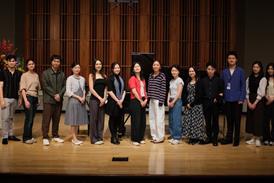
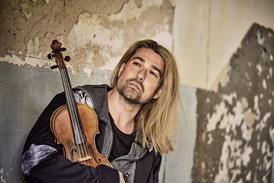
Ultimately, Pagano won the top Queen Mathilde Prize of €25,000, plus the coveted four-year loan of the ‘Casals’ Gofriller, a result that felt well deserved given the consistency and authority of his performances. Kim was awarded the €20,000 second prize plus the listener-voted Klara Prize of €2,500, and Ko was third, winning the Count de Launoit Prize of €17,000. Lozano Cames came fourth (his support cohort nearly deafened me with their screams when his name was announced), Kitamura fifth, and Zaitseva sixth. As the finalists gathered on stage, the sense of shared experience seemed to outweigh the hierarchy of the results. The musicians had navigated an intense and highly visible journey, emerging not only as competitors but as colleagues. As Pagano reflected the following day: ‘We’re all winners.’
With the competition concluded, the laureates then embarked on a series of concerts the following week – an early step in what will surely be promising international careers.
Read: Reflections on the Queen Elisabeth Cello Competition with 2022 winner, Hayoung Choi
Discover more Featured Stories like this in The Strad Playing Hub.
Read more premium content for subscribers here








No comments yet