At the 2026 edition of the Elmar Oliveira International Violin Competition in Florida, Martin Goldman found the standard was higher than ever

EOIVC 2026_Hyun Jae Lim_Finals_Amy Pasquantonio

Photo: Amy Pasquantonio

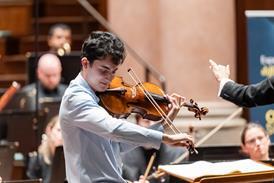
First prize winner Hyun Jae Lim demonstrated depth and maturity

Discover more Featured Stories like this in The Strad Playing Hub.

Read more premium content for subscribers here

Here’s a quote from mezzo-soprano Denyce Graves about opera, though it could also be applied to string playing: ‘It is a profession shaped by the ideal that music can change the human spirit, that this work is a requirement for the health of our society and must be fuelled by an inextinguishable passion.’

Elmar Oliveira hasn’t just talked about fixing the world; he has acted on his belief. The triennial Elmar Oliveira International Violin Competition (EOIVC), which forms part of the Elevar Foundation, is one of only two major international competitions in the US exclusively for the violin. As competitions have become ever more important for building careers, the best players compete; some already have management or an educational scholarship, and have performed with major orchestras.

The quality was so high for the 2026 edition, which took place from 4–18 January, that the jurors had to decode nuanced differences in interpretation, passion and communication. Having himself been put on the world stage by winning a competition (the 1978 Tchaikovsky Competition in Moscow), Oliveira understands the challenges.

The jury chair was violinist Andrés Cárdenes, who was a juror at the inaugural competition in 2017. The other members were Ilya Kaler, Ida Kavafian, Irina Muresanu, Philip Setzer, Dmitry Sitkovetsky, Kyoko Takezawa and reserve juror Elizabeth Pitcairn. The mark of a juror, I was reminded, lies in the ability to put aside subjective preferences and judge a performance in its own right.

The EOIVC venue has always been Lynn University in Boca Raton, Florida, where Oliveira began teaching more than twenty years ago. The Lynn Conservatory of Music’s hall, used for the preliminary and semi-final rounds, had excellent acoustics. Each round was broadcast live, reflecting Oliveira’s aim to make music accessible to all.

For the preliminary round, 20 violinists aged 18–30, from 11 countries, were selected – by a separate committee – from 70 applicants. They arrived to a climate with temperatures in the mid-twenties and high humidity – ideal for us Florida residents, but for some it meant that a bow rehair and instrument check were necessary, and this was carried out at Barnes Violins in Boca Raton.

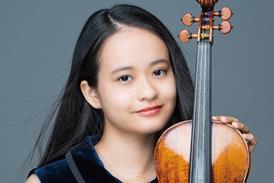
EOIVC 2026_Yiyang Hou_second place_Amy Pasquantonio

Photo: Amy Pasquantonio

Second prize winner Yiyang Hou

As a wonderful perk that any violinist would surely love, everyone received a bridge with their name on it, courtesy of Barsa Bridges – a company that sources its wood in Bosnia. The order of performance was determined by picking out each bridge at random and reading out the player’s name.

The preliminary round took place over three days. Each player was allotted an hour in which they were required to play one movement of solo Bach, two Paganini caprices, the first movement of a Mozart concerto (accompanied by piano) and Wood-Sprite, the specially commissioned solo piece by Melinda Wagner.

For the competitors, nothing was left to chance in their preparation: programme order, comportment, whether to use sheet music or a tablet, what to wear… Then came the performances. I was sure they could all be winners; the level of technique on display was prodigious, underscoring an abundance of musical ideas. I was reminded of what Cárdenes told me: ‘Technique is vocabulary.’

Wood-Sprite is based on romantic ideas of what a wood-sprite represents: a fairy or natural spirit protecting a wooded area. It could be that the sprite lives inside the violin, or the violin itself is the wood-sprite. One player told me it was beautifully written for the instrument. Once it’s published it will make a great addition to the repertoire.

Because of the daunting responsibility of appraising each player fairly, the jurors took time to deliberate between each player’s programme. They took even more time to choose the eight semi-finalists: imagine having to eliminate eleven players.

The semi-finals called for a complete sonata from a challenging list, an Ysaÿe solo sonata and a virtuosic work with piano. There were a few Prokofiev, Schubert and Saint-Saëns sonatas. Most chose Ysaÿe’s Sonata no.3 ‘Ballade’. Virtuosic choices included Sarasate’s Caprice basque, Ravel’s Tzigane, Kreisler’s Tambourin chinois and Wieniawski’s Scherzo-tarantelle.

Each player took us on a convincing journey, well worked out and performed. Every pianist was sensitive to exactly what the player wanted, making for polished performances. The violin used frequently made a difference, with some more strident, others more amenable to nuance of colour and tone. To my ears, these differences were most noticeable in passages played higher up on the G string.

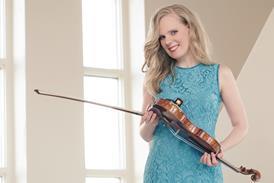
EOIVC 2026_.Julia Jones_Fourth Place_Amy Pasquantoniojpg

Photo: Amy Pasquantonio

Fourth prize winner Julia Jones

To pick the four competitors for the concerto finals, the jury had a wide range of talent to consider. They chose Sameer Agrawal, 20, and Julia Jones, 21, from the US, 21-year old Yiyang Hou from China and 28-year-old Hyun Jae Lim from South Korea. That was on Wednesday, with the final taking place on Sunday.

Then came rehearsals with the Lynn University Philharmonia conducted by up-and-coming Gerald Karni, 30. Agrawal and Lim both chose Sibelius (which, over time, has become the EOIVC favourite), Jones selected Mendelssohn, and Hou went for Tchaikovsky. The EOIVC repertoire list had included Vieuxtemps’s Violin Concerto no.5 in A minor, which the competitors may not have realised was played by Oliveira in the Tchaikovsky Competition (in which, incidentally, he remains the only American violinist to have won first prize).

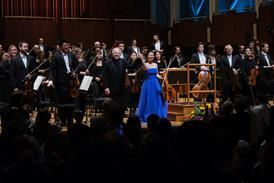
The excitement for the final, a four-concerto afternoon at the Keith C. and Elaine Johnson Wold Performing Arts Center, was overwhelming. Besides local enthusiasts, there were any number of musicians in the audience, as well as dealers and sponsors of the competition.

Karni led the orchestra competently through every tempo change and pause. And the soloists? Each one performed with finesse and technical ease, bringing out the shapes and colours of each movement, and noticeably as absorbed by the orchestral part as they were by their own. Four personalities left their mark.

EOIVC 2026_Sameer Agrawal_third place_Amy Pasquantonio

Photo: Amy Pasquantonio

Third prize winner Sameer Agrewal

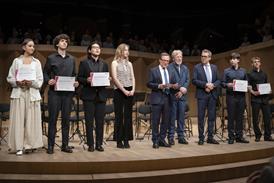
The eventual winner, Lim, was on a higher emotional level of sensitivity, power and introspection. Maybe the fact that she was seven years older than the others was in her favour. Her Sibelius was as mature as it gets, garnering a standing ovation after her final flourish. She took home the $30,000 first prize along with a new violin by Phillip Injeian, a gold-mounted bow by Vladimir Radosavljevic and a carbon violin case, and will receive a host of concert and management opportunities over the next three years. She also won the awards for best interpretation of Wood-Sprite ($1,500) and best performance of an Ysaÿe sonata ($500).

The $15,000 second prize was won by Hou, the $10,000 third prize went to Agrawal, and the $5,000 fourth prize was awarded to Jones.

The EOIVC’s executive director Jill Arbetter runs the Elevar Foundation with the devotion of a family member, and takes to heart its ambition to launch careers and build community. Competition winners therefore also take part in outreach programmes, going into underserved communities and care homes – all part of Elmar Oliveira’s vision.