

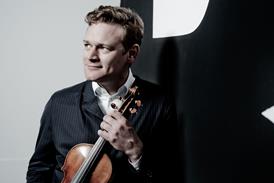






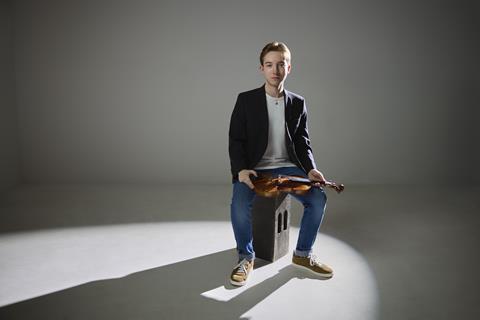
The Canadian violinist speaks to The Strad about his career since his joint victory at the 2024 Joseph Joachim Violin Competition, ahead of his debut album release of works close to his heart
Discover more Featured Stories like this in The Strad Playing Hub.
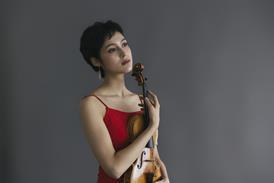
On 28 August, Canadian violinist Jacques Forestier will release his debut album Song & Dance on Warner Classics. The recording forms part of Forestier’s prize package from winning joint first prize at the 2024 Joseph Joachim Violin Competition, at the age of only 19.
The album ranges from showpieces to transcriptions of songs and folk music, with each selection representing a composer that has played a meaningful role in Forestier’s musical journey so far: Wagner, Bartók, Gershwin, Wieniawski, Ernst, Brahms, Ysaÿe and Bach.
Two years on from his competition victory, he speaks with The Strad reflecting on his career since then, as well as his repertoire choices and the violin on which he recorded his album.
What were your fondest memories of the 2024 Joseph Joachim Violin Competition? In what ways do you feel the joint victory helped launch your career?
One of the many elements that made the Joseph Joachim Violin Competition so special for me was being able to share in music with so many different musicians. I remember my first musical interaction with Boris Kusnezow, who has now become a dear friend, playing the Schubert A Major Sonata ‘Grand Duo’.
It was so unbelievably inspiring and liberating being able to make music with someone whose heart, ears, and hands are so very active and flexible for the music. It’s these moments that live with me in music.
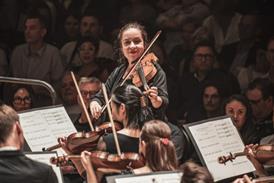
Similarly happy memories include some unforgettable Haydn ’sight-reading’ with the wonderful Kuss Quartet, the superb Munich Chamber Orchestra, and of course the inimitable NDR Radiophilharmonie with whom I have had the honour to collaborate since in concert (and will do again soon).
What have been some career highlights for you since the competition?
The Joseph Joachim Competition is incredibly special in that it offers such a wide range of prizes to its winners. As we know, nowadays, winning a competition and receiving a generous cash prize isn’t enough to generate a big career, but the diversity of prizes from the Joachim certainly opens many doors, particularly with regards to the many partnerships the competition has.
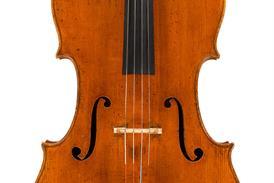
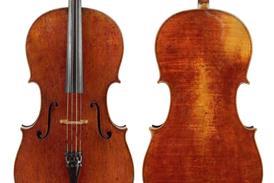
I have particularly benefitted from the partnerships with concert presenters across Europe, their relationship with the Fritz Behrens Foundation in facilitating the loan of a beautiful Guadagnini violin, and of course the rare opportunity to record on the Warner Classics label – the latter definitely being a highlight.
Some highlights since the competition include play-leading at the NFM Wroclaw and City Hall Concert Hall Hong Kong, opening the Edmonton Symphony Orchestra’s season with the Dvořák Violin Concerto and playing the Mendelssohn Concerto with the NDR Radiophilharmonie.
Some upcoming solo highlights include debuts with the Munich Symphony at the Isarphilharmonie, Mozart’s Sinfonia concertante at the Kölner Philharmonie, and Dvořák’s Violin Concerto with the Calgary Philharmonic.
As part of your prize package, you got to record an album for Warner Classics. Tell us about the choices of repertoire on the album and their significance to you.
The concept behind Song & Dance started as I was exploring how to identify and express more distinction between singing and dancing material in the music we play.
I always ask myself when I am looking at a score, ’what kind of sound does this material need?’ Having different profiles of music in your sound toolbox only does greater justice to the music you’re playing and adds much needed variety to one’s expression.
When creating my debut album, it was particularly important to me that it wouldn’t be ’just one thing’, so that’s when this idea came to mind. It enabled me to pair these often-opposing styles so the listener can hear how song and dance differ from, and sometimes complement, each other.
It also allowed me to include music from an incredibly diverse mix of musical cultures. I’ve drawn from areas that resonate with my identity. Having studied in the US for a number of years, choosing Gershwin was important to me; Bartók has been a very important composer in my life; Wienawski’s Polonaise was the first virtuoso work I learnt – so every piece on the album is really also a commentary on my own identity and journey.
Tell us about the loaned Guadagnini instrument you recorded the album on.
One of my prizes from winning the competition was a three-year loan of a beautiful Guadagnini violin from Parma generously offered by the Fritz Behrens Foundation.
This was a particularly important prize for me as I had played on a violin my parents had bought me at the age of ten for my entire life to that point. It was a wonderful violin for the teb-year-old me, but by 19 I was really growing out of it, and it was not suitable to be playing on important stages with major orchestras.
Learning how to play on this Guadagnini has done wonders for my sound production and musical voice. Two years later, I still feel like I am learning how to play on it!
During my first year on this new instrument, it was unfortunately having some issues, so I had to leave it in Germany for four months during summer 2025. My album was arranged to be recorded during this period, so I had to organise an instrument to play on for it as well as my other engagements.
I called Roberto Díaz, who is the president of the Curtis Institute of Music, and with whom I had just performed at the Library of Congress in D.C. I explained my situation, and he saved the day and loaned me another Guadagnini, also from Parma, to use until mine was fixed, so I used a 1767 Parma Guadagnini on loan from the Curtis Institute of Music for the album.
It was a phenomenal instrument as well. When I got the Guadagnini from the Behrens Foundation back, I couldn’t believe the improvement. It was extraordinary, so I’m very fortunate to have this jewel!
Song & Dance is released on Warner Classics on 28 August 2026.
Read: Postcard from Hanover: Joseph Joachim Violin Competition
Read: Postcard from Brussels: Queen Elisabeth Cello Competition
Discover more Featured Stories like this in The Strad Playing Hub












No comments yet