
- News
- For Subscribers
- Student Hub
- Playing Hub
- Directory
- Lutherie
- Magazine
- Magazine archive
- Whether you're a player, maker, teacher or enthusiast, you'll find ideas and inspiration from leading artists, teachers and luthiers in our archive which features every issue published since January 2010 - available exclusively to subscribers. View the archive.
- Jobs
- Shop
- Podcast
- Contact us
- Subscribe
- School Subscription
- Competitions
- Reviews
- Debate
- Artists
- Accessories





![Ayanna Witter-Johnson [Jordan Woods] 7](https://dnan0fzjxntrj.cloudfront.net/Pictures/274x183/4/9/4/44494_ayannawitterjohnsonjordanwoods7_224583.jpg)


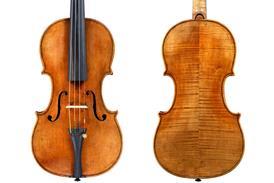



In Focus: From Strad to Slava
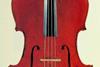
The ’Duport’ cello is a fine example of Stradivari’s ‘Form B Piccola’. Samuel Zygmuntowicz examines Rostropovich’s own instrument, in this article from October 1997
AIthough Stradivari was not the first maker to design and build moderate-sized cellos suitable for solo playing, once he began building his ‘Forma B Piccola’ around 1707, he produced a group of the finest cellos ever made. These instruments which include the ‘Duport’ of 1711, now played by Rostropovich, the ‘Davidov’ of 1712 (ex-du Pre now Yo-Yo Ma) and the ‘Batta’ of 1714 (Piatigorsky), vary slightly in detail but they all retain the basic design and dimensions.
Already subscribed? Please sign in
Subscribe to continue reading…
We’re delighted that you are enjoying our website. For a limited period, you can try an online subscription to The Strad completely free of charge.
* Issues and supplements are available as both print and digital editions. Online subscribers will only receive access to the digital versions.
Keep informed