





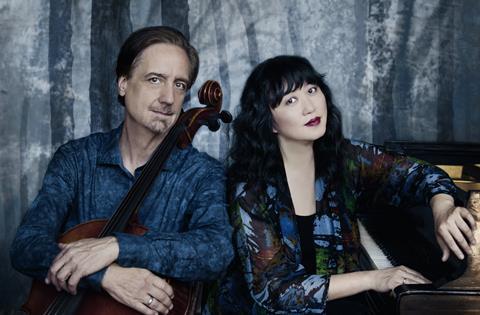
Cellist David Finckel tells Thomas May about recording Beethoven’s six piano trios with Wu Han, each featuring a different violinist – and why the project reflects the philosophy behind their ArtistLed label
Read more Featured Stories like this in The Strad Playing Hub
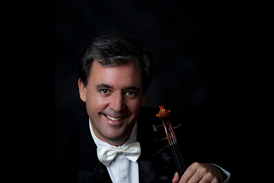
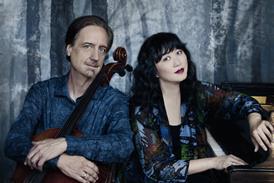
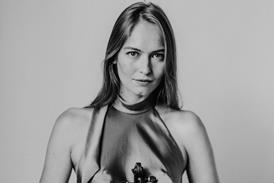
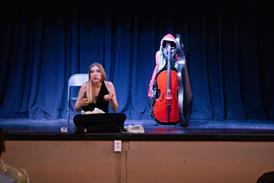
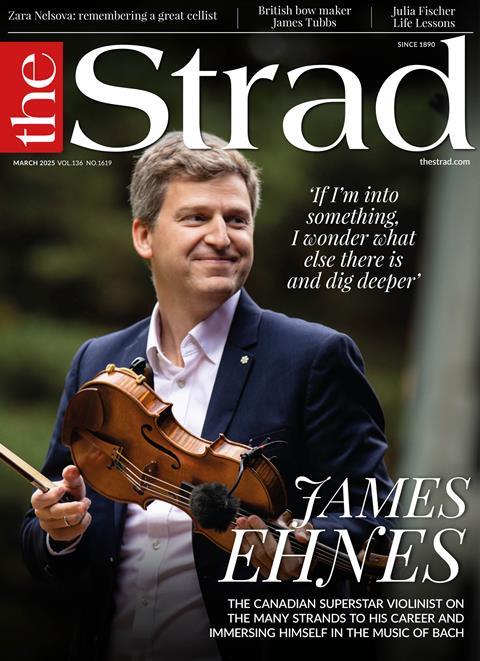
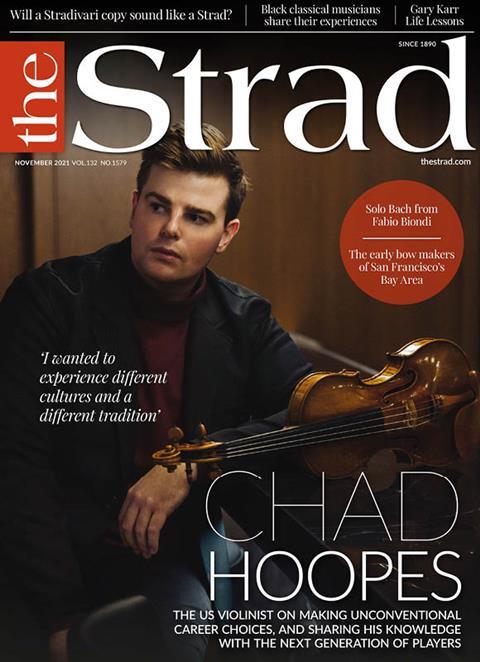
For their new recording of Beethoven’s six piano trios, cellist David Finckel and pianist Wu Han introduced one deliberate variable into the project. Recorded over the course of nearly a year, the cycle keeps Finckel and Wu Han as the constant partnership while featuring a different violinist in each trio: Chad Hoopes in Op.1 no.1, Danbi Um in Op.1 no.2, Arnaud Sussmann in Op.1 no.3, Kristin Lee in the ‘Ghost’ Trio, Paul Huang in Op.70 no.2 and Benjamin Beilman in the ‘Archduke’.
The idea grew from Finckel and Wu Han’s sense that rehearsing and performing Beethoven’s six piano trios is ‘like coming to know six distinct individuals’. Even the trios composed side by side, they have observed, can inhabit markedly different musical worlds; giving each work a different violin voice became a way of reflecting those contrasts. Matching particular works with particular violinists, Finckel says, came naturally from their previous collaborations.
‘Our performance history with all six violinists has been quite extensive, so we know them all very well as musicians and friends,’ Finckel explains. Some of the trios they had already performed with them, and ‘they were natural choices’, while with the others, the repertoire they had previously played together suggested ‘this or that trio’.
With the violinist changing from session to session, how did those different personalities affect the musical relationship within the ensemble? Finckel cites a quotation he had recently encountered from Sir Edmund Hillary: ‘It is not the mountain we conquer, but ourselves.’
‘How true this is for musicians entrusted with the interpretation of masterpieces,’ Finckel says. ‘With the music as our mountain peak, it is truly a team effort to make the climb. It was incredible to work with these six violinists. The more talent and perspectives, the better.’
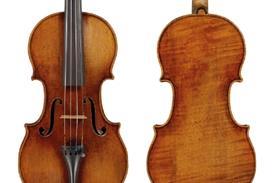
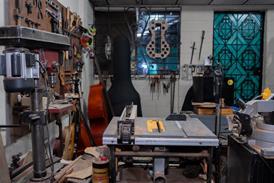
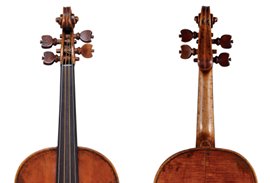
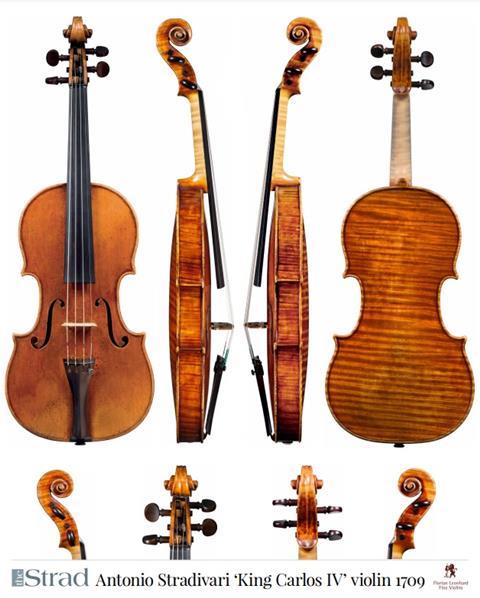
The project also brought together a striking range of instruments. Danbi Um plays the 1683 ‘Petschek’ Nicolo Amati, Arnaud Sussmann a 1731 Stradivari, while Benjamin Beilman and Paul Huang play Guarneri del Gesù instruments and Kristin Lee a 1759 Gennaro Gagliano. Chad Hoopes’s instrument is a 1991 Samuel Zygmuntowicz ‘Isaac Stern’ – made by the same maker as Finckel’s own 1993 cello.
Asked about the contrasting tonal qualities of the instruments, Finckel returns to the score as the starting point. ‘With the score as our road map, we work together to make the music sound like we think Beethoven meant it to,’ he says. Even within a single work, ‘there are moments when we are called upon to produce colours light or dark, vibrato more or less intense, intense articulation or seamless legato’.
‘Thankfully all our guests are playing on great instruments that will do what they ask. But like Hillary said, the asking has to be done by us.’
Did any of the violinists nevertheless reveal something unexpected during the sessions? ‘There is a simple answer to this question: no,’ Finckel says. ‘We already knew them extremely well and had played so much with each. We’ve been through a lot together.’
He points to Beethoven trios in China with Lee and Hoopes, Tchaikovsky’s Trio in St Petersburg with Huang, and previous Beethoven recordings for Music@Menlo LIVE with Sussmann. ‘It goes on like that.’
That familiarity did not mean the players were interchangeable. For Finckel, the differences between individual musicians extend to the challenges they encounter in the music.
‘I think that any musician will tell you that for whatever reason, some things are difficult for them that are easy for others,’ he says. ‘It’s not a question of talent but simple genetics: we are all human and therefore each of us is different.’
Finckel remembers his grandmother saying: ‘Thank God we are all different!’ ‘I’m happy to go with that flow,’ he adds. ‘Sure, every violinist I recorded with could do something better than me – but like real life, I just had to catch up.’
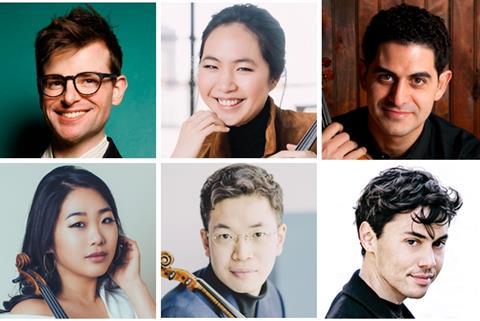
The six violinists were also unusually closely involved in the recording process. Each violinist stayed at Finckel and Wu Han’s home and participated in both recording and post-production – an arrangement that gave Finckel an opportunity to explain what is ‘so special for us about our recording process’.
ArtistLed, he recalls, was born in the spring of 1997, when one of the duo’s first recordings appeared on the cover of BBC Music Magazine. ‘We had a choice in front of us: should we use this incredible publicity to attract a major label, or should we create our own company?’
‘At the time, the direction of the commercial recording industry was in flux, and we did not want to be artistically controlled by markets, executives, unfamiliar producers, and repertoire requirements. So we created ArtistLed, and the name says it all: the musicians are in control of everything.’
They have made every duo and chamber recording for the label that way, Finckel says, ‘with the musicians fully in control of the recording process and post-production’. But there was also something different about opening up that process to six other players.
‘We’ve always felt a bit selfish about keeping this fantastic process so much to ourselves,’ he says. Inviting ‘these six consequential violinists, each with a great future’ was ‘a very meaningful way to share this wonderful thing we created’.
‘I’m sure not one of them will forget the magical days we spent together, working and listening and adjusting and becoming better players and making these trios sound like we think they should.’
And the six recorded pairings are not necessarily the end of the experiment. ‘As we love and admire these violinists so much, we have quietly vowed to play each trio with each one someday!’ Finckel says. ‘We would love to hear all of their approaches.’
Read: ‘A second golden age’: cellist David Finckel on luthier Samuel Zygmuntowicz
Read: Memories at Menlo with David Finckel and Wu Han
Discover more Featured Stories like this in The Strad Playing Hub








No comments yet